

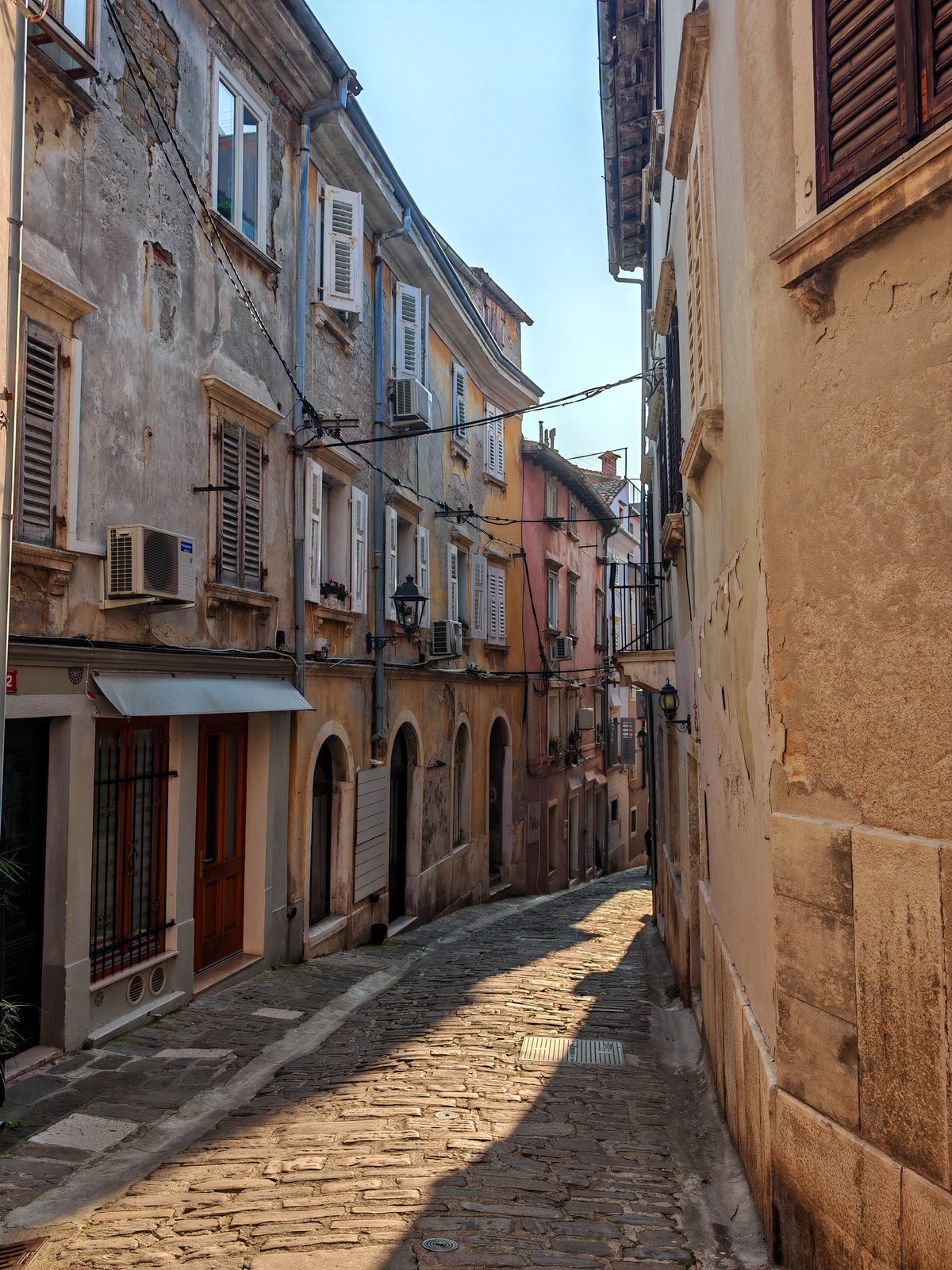
We decided to set up our base for this trip in Piran, right in the heart of the old town. As usual, we found our accommodation through Booking. An important practical tip right at the start: cars are not allowed into the strict centre of Piran. So we found parking a little further away, in an underground garage on the hill above the town, and walked down into its narrow, stone streets.
Piran is one of the most beautiful and best-preserved historic towns in the south-west of Slovenia. Thanks to its preserved medieval architecture and Venetian-style streets, the whole town resembles an open-air museum. There are no classic, sprawling beaches here; you mostly enter the sea via stone steps, but that is precisely what gives it that particular, authentic Mediterranean feel. Restaurants and cafés line the entire waterfront, which makes the evening walks by the sea a special experience.
TOP EXPERIENCES: What to see in Piran
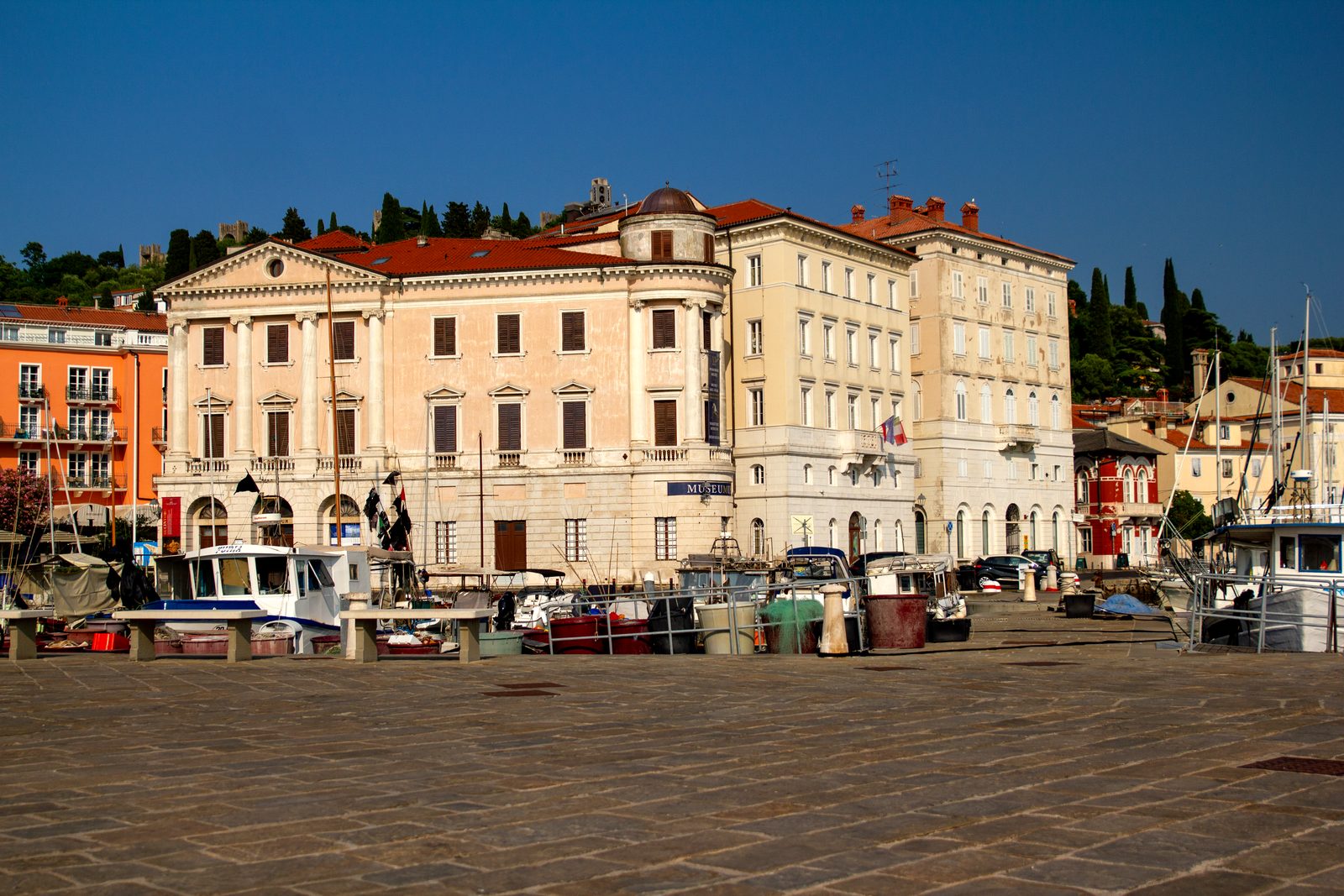
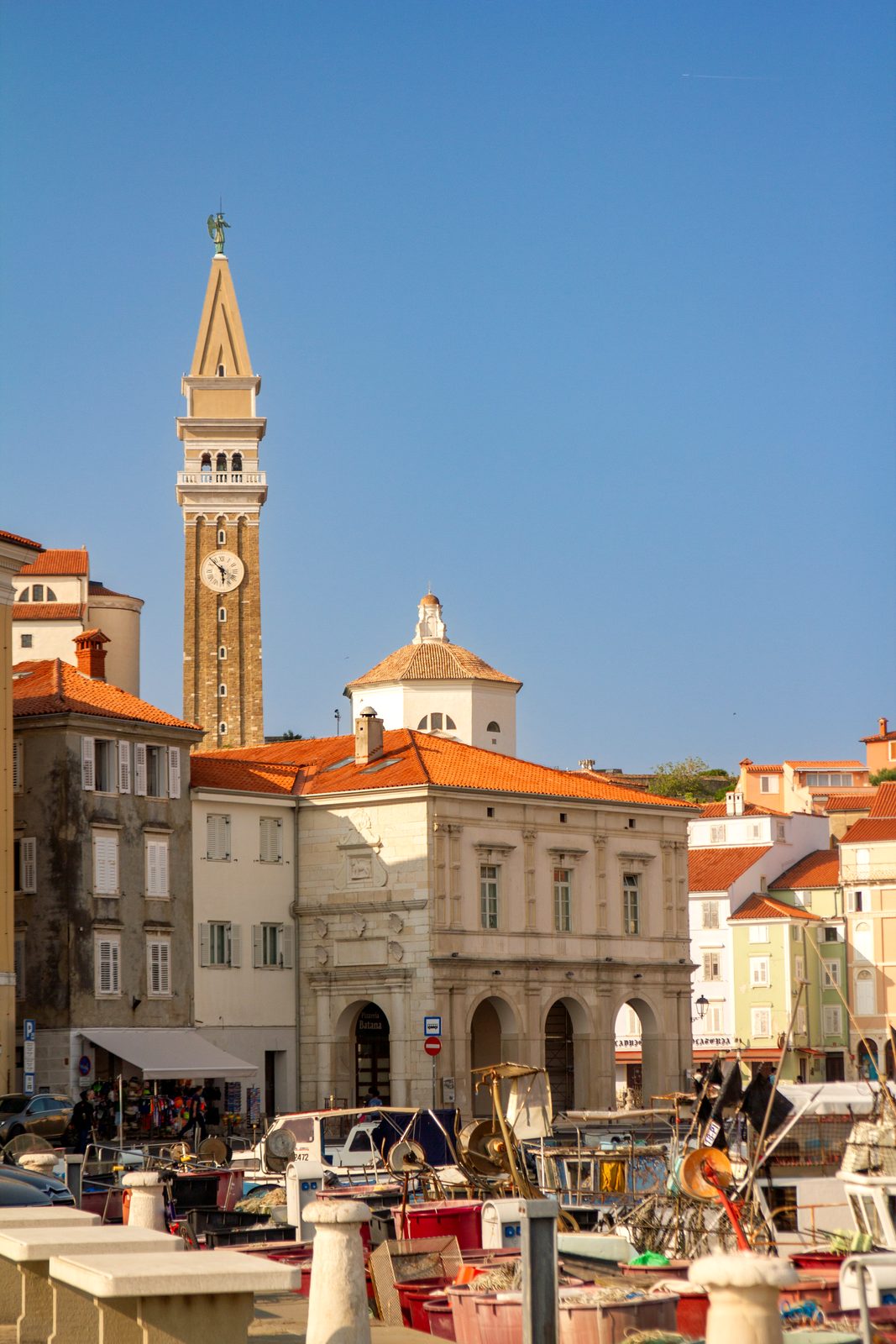
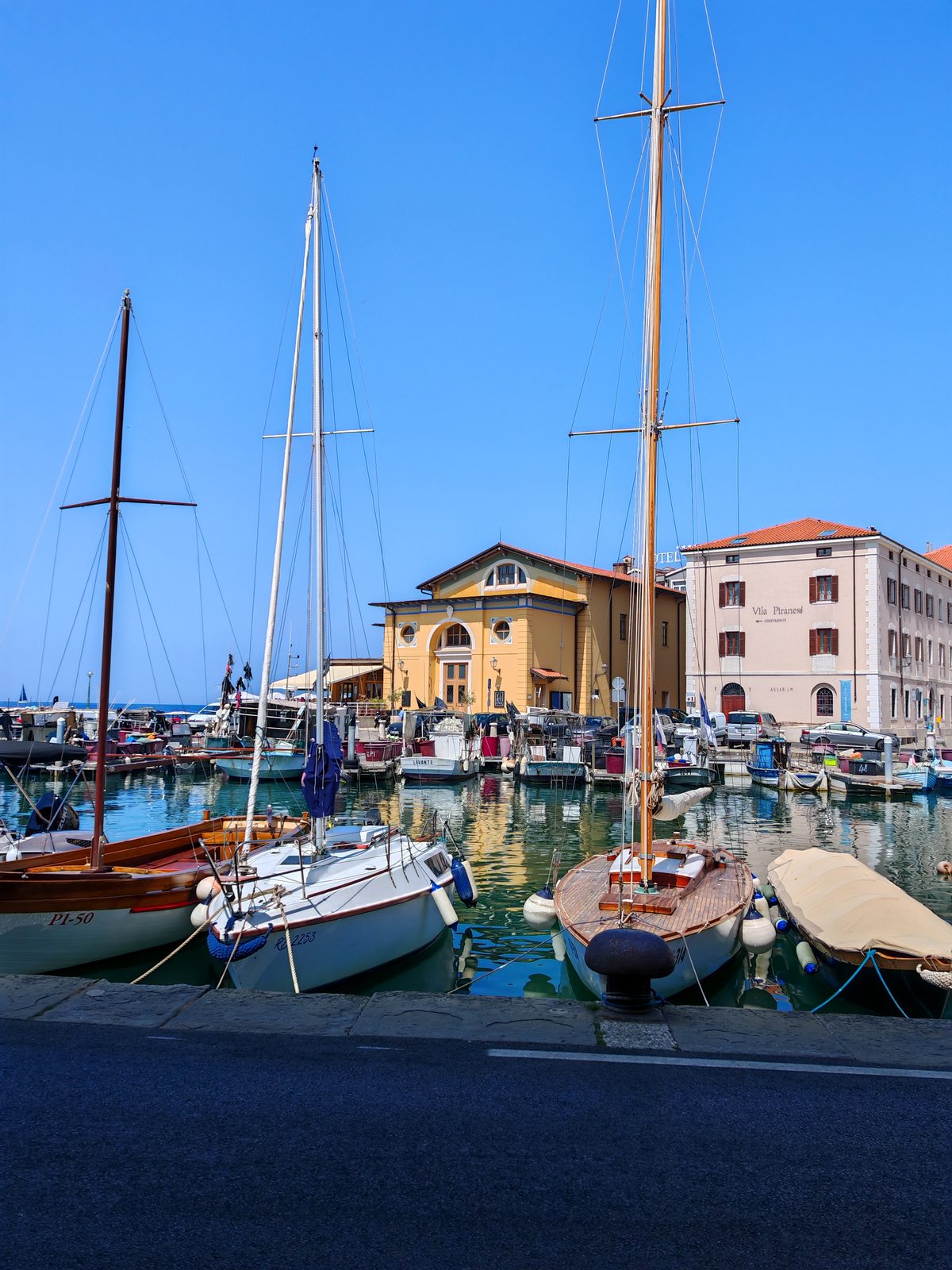
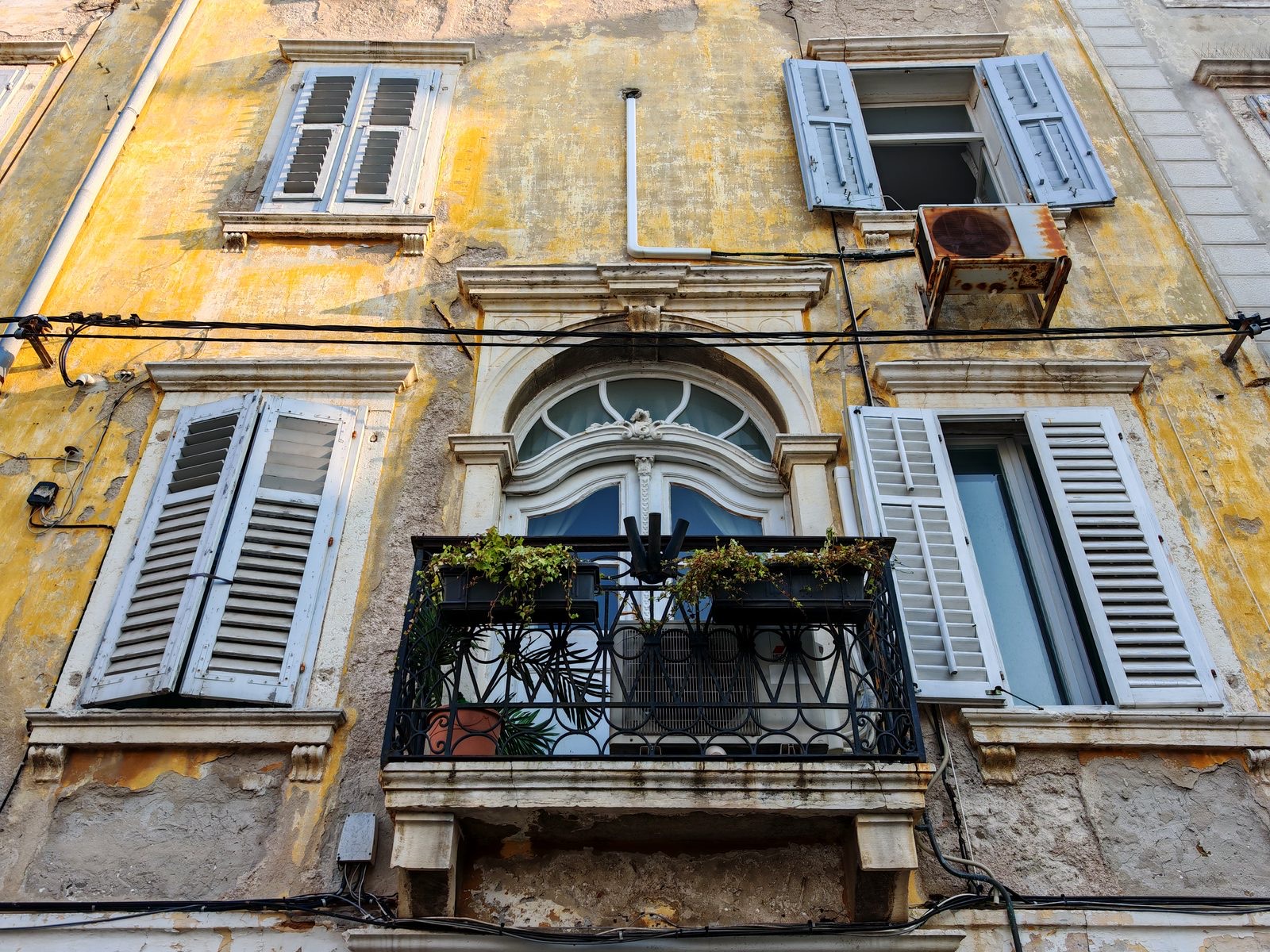
- Tartini Square: The main town square, in the shape of an ellipse, was once a fishing harbour. Today it is a magnificent centre dominated by a monument to the famous composer and violinist Giuseppe Tartini, born in Piran.
- The Church of St George: It rises on the hill above the town itself. Its bell tower is a faithful replica of the one in St Mark’s Square in Venice. From this point there is a surreal view of three countries at once – Slovenia, Croatia and Italy.
- The walls of Piran: The medieval defensive walls lie above the old town core and are by far the best place for panoramic photography of the whole peninsula.
- Cape Madona (Punta): The very tip of the peninsula with a lighthouse, an excellent promenade and places serving always-fresh seafood.
- The Sečovlje salt pans: Located in the immediate vicinity of the town, this is a place where salt is still produced in the traditional way, over 700 years old.
A day trip: Trieste and „film-star” pizza
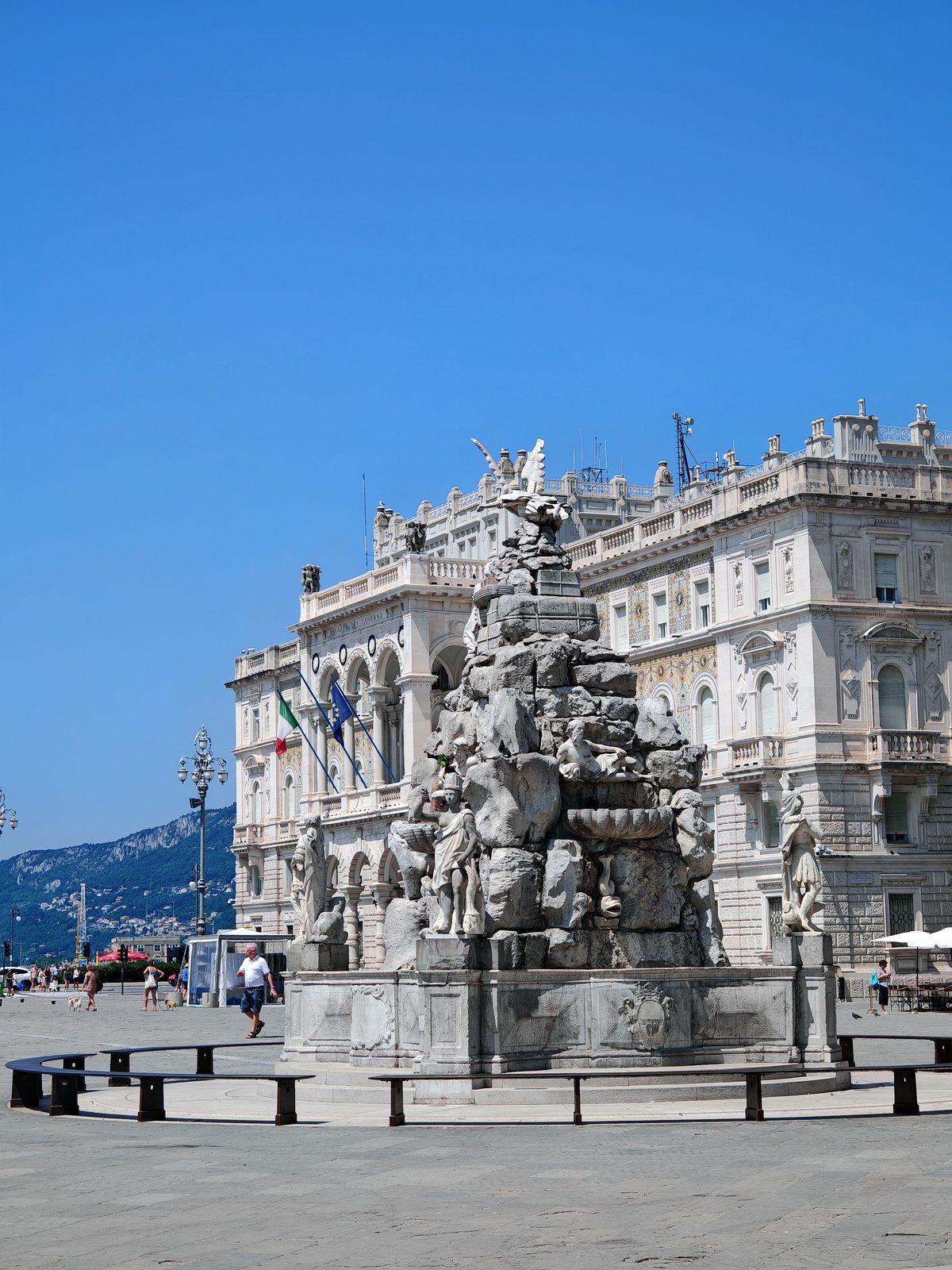
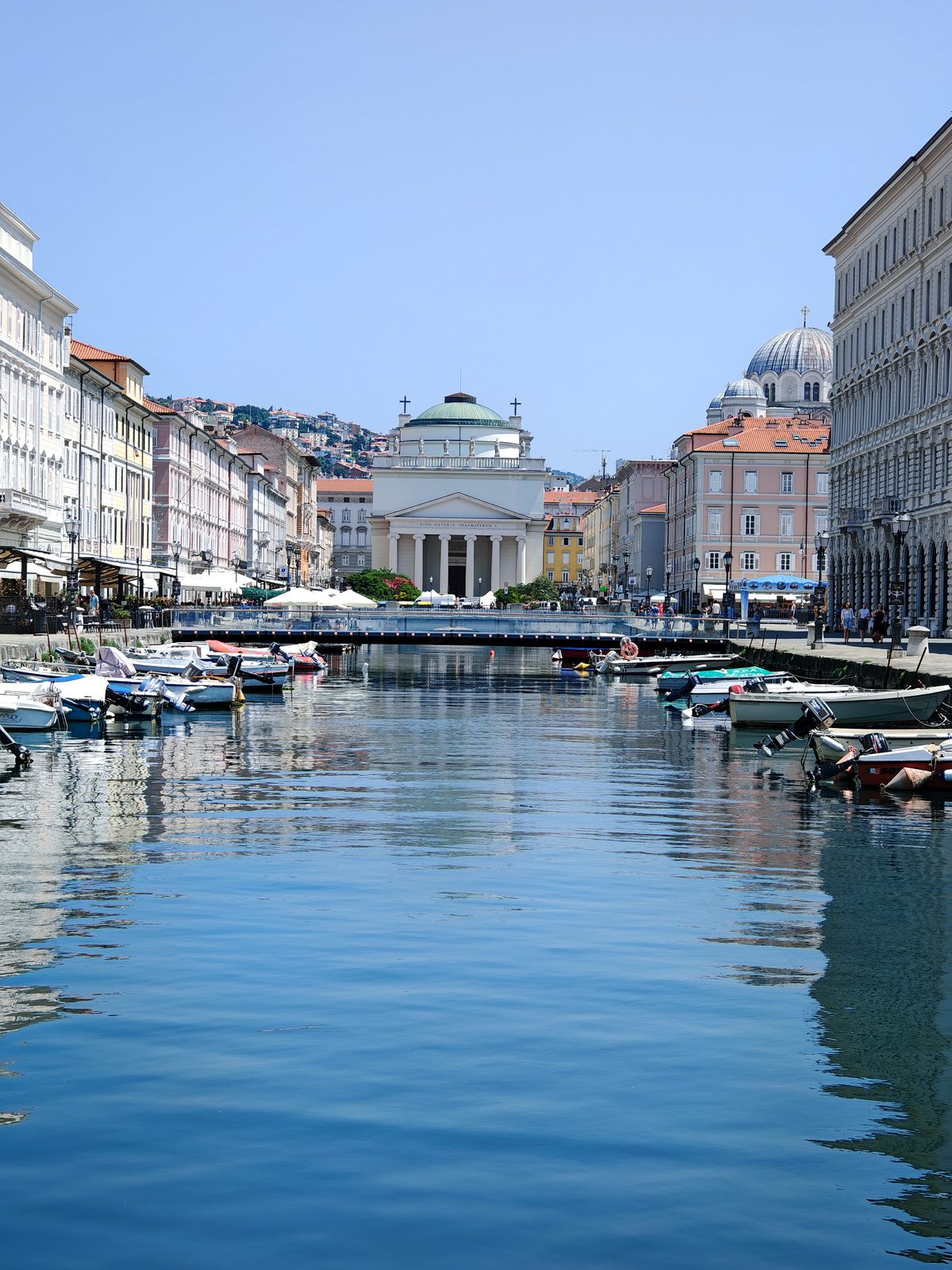
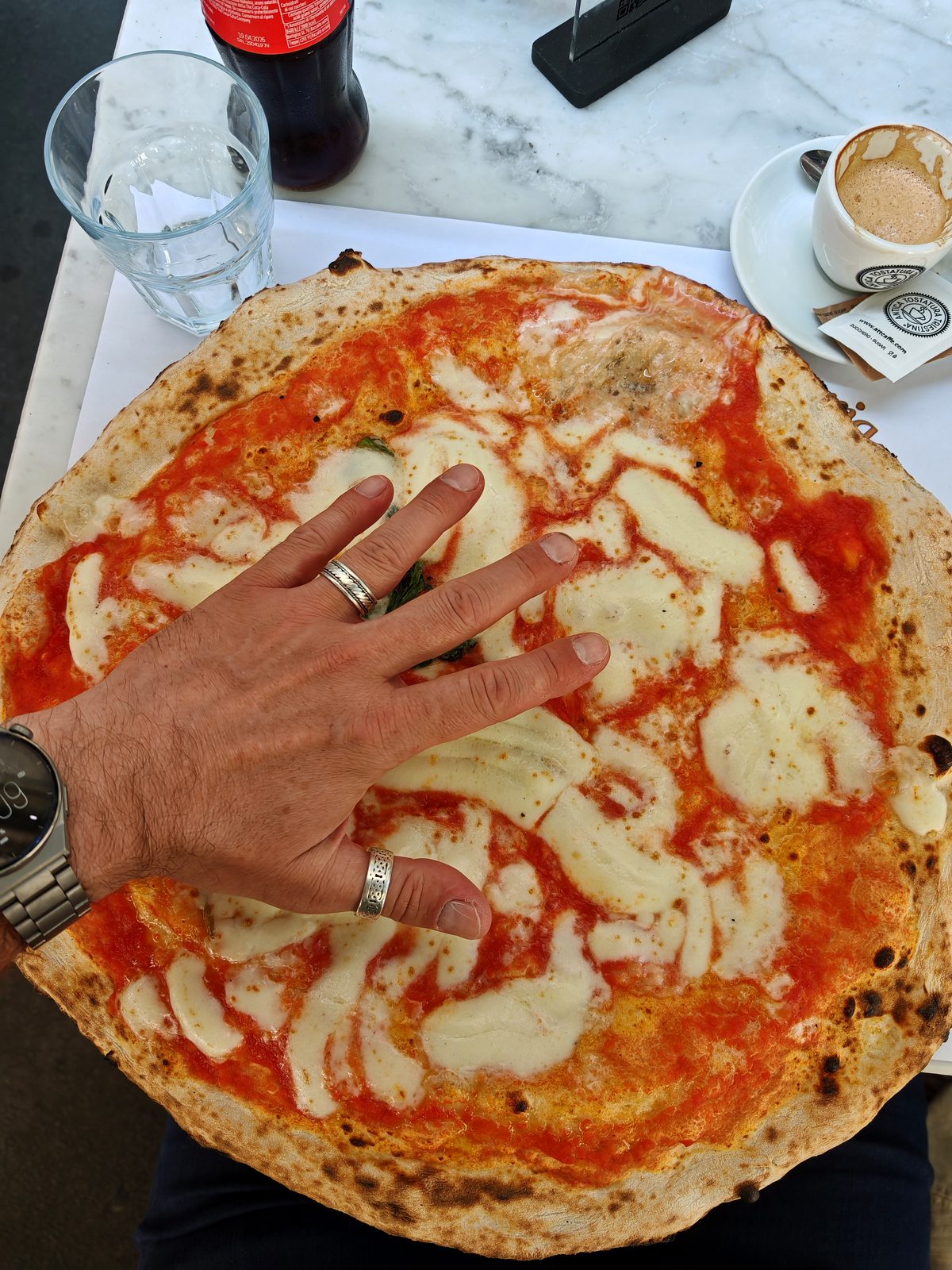
We set aside one day for Trieste, a port city in the north of Italy. Given that for centuries it was the main port of Austria-Hungary, Trieste today has that unusual Central European spirit, perfectly blended with Italian charm.
We strolled through the Piazza Unità d’Italia, the largest European square that opens directly onto the sea, and visited the Canal Grande, a picturesque part of the city where locals most love to drink espresso. The highlight of the tour was Miramare Castle, a white 19th-century castle built on a cliff above the sea. An interesting, insider detail: pets (dogs) are allowed into the museum part of this castle.
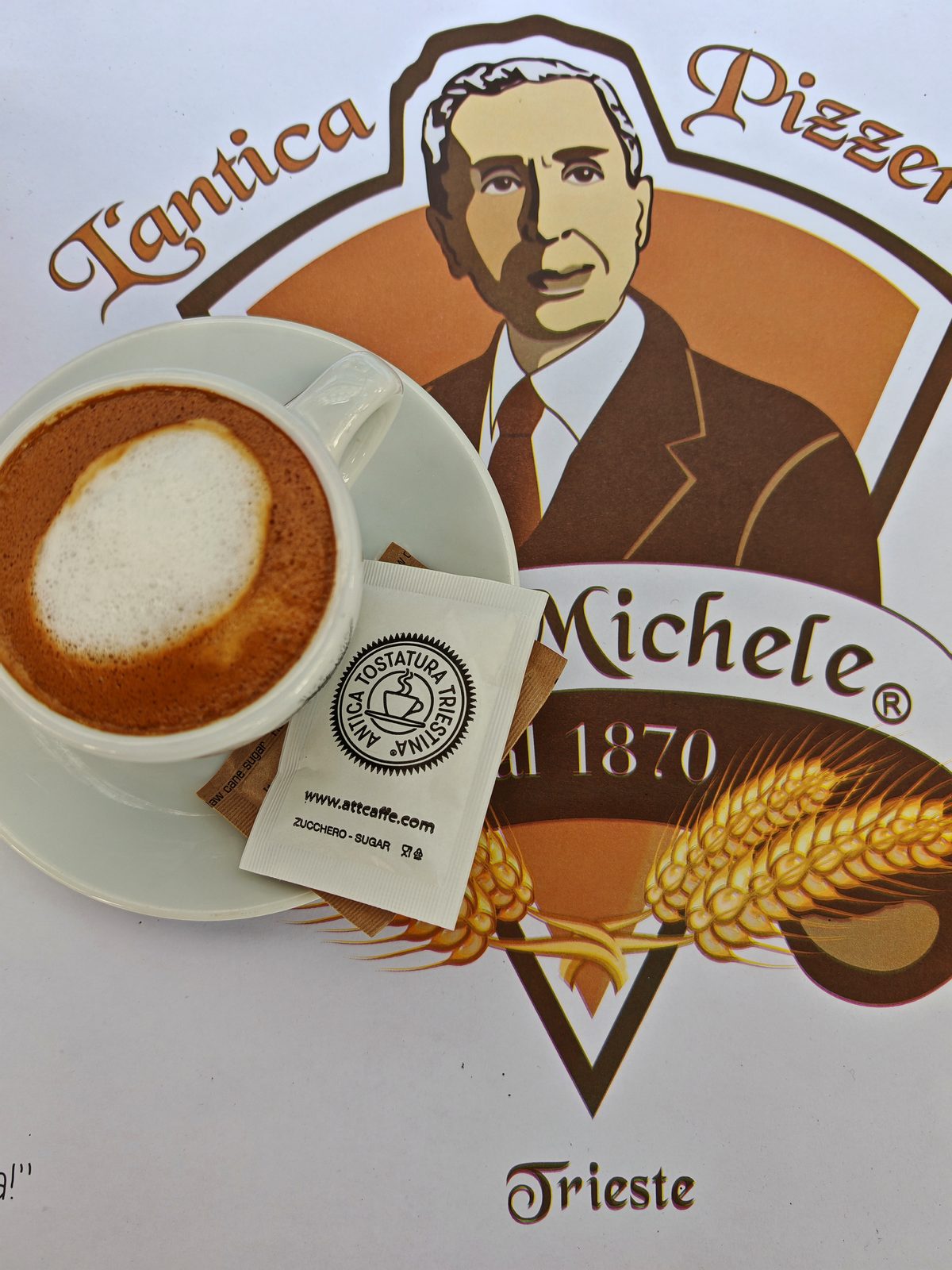
We reserved lunch at L’Antica Pizzeria Da Michele. It’s a franchise of the cult Neapolitan pizzeria, most famous for the fact that Julia Roberts enjoyed it in the film „Eat, Pray, Love”. Although the famous film scene was shot in the original venue in Naples, with the opening of this franchise in Trieste you get a completely identical, authentic taste that makes waiting for a table worthwhile. Incidentally, the pizzas are huge.
Muggia: An Italian town with an Istrian soul
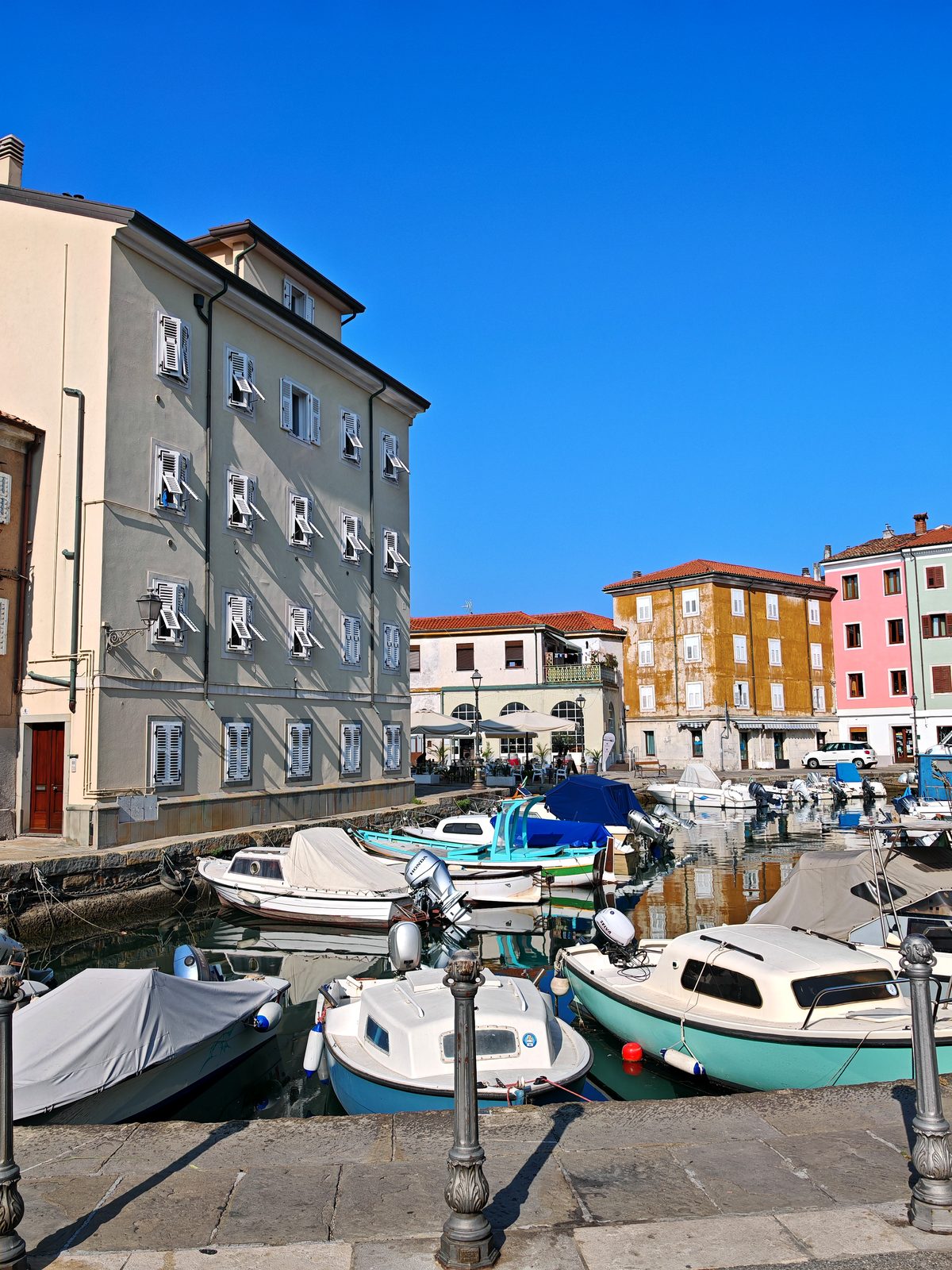
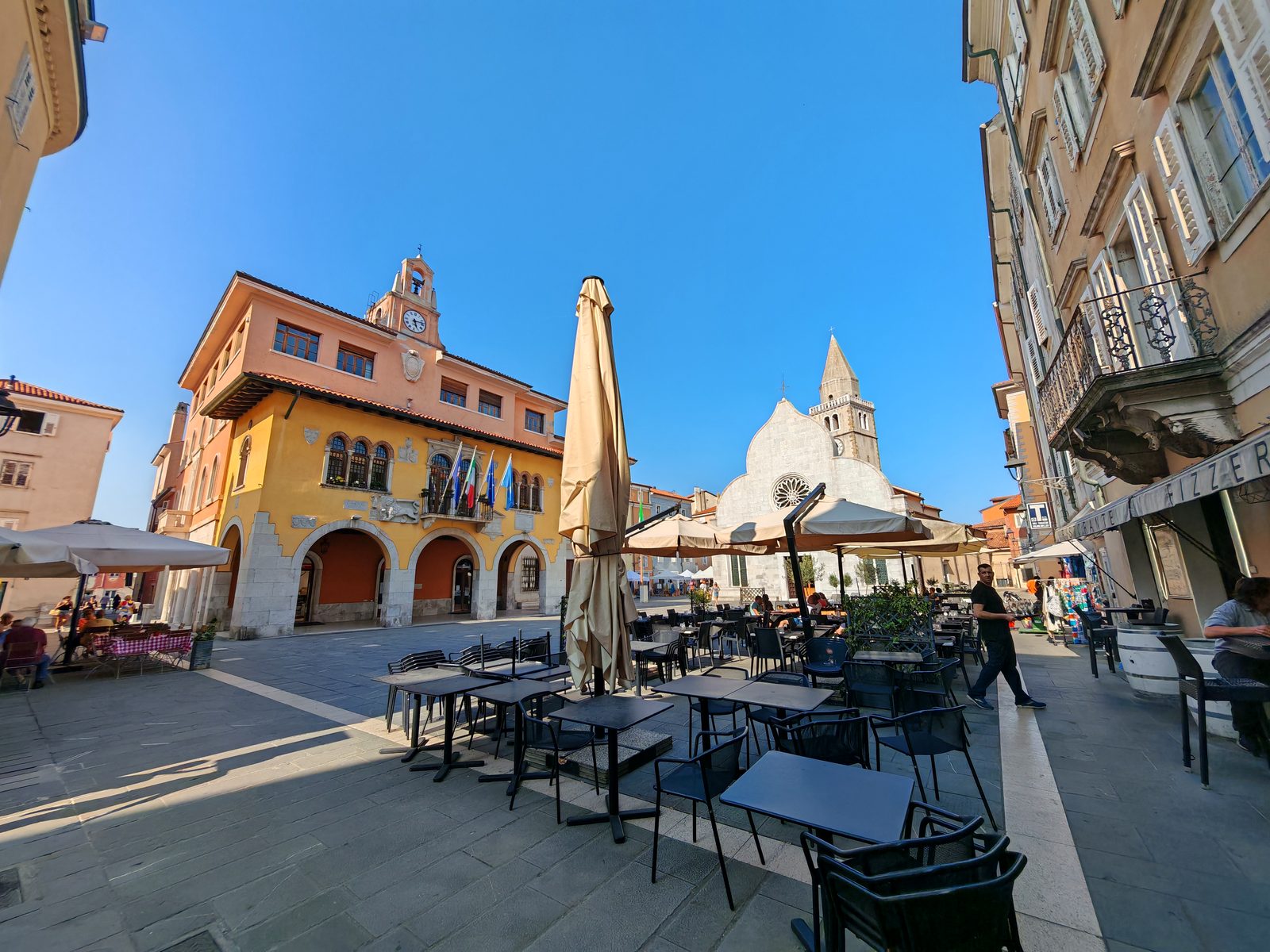
On the way back to Piran, we stopped in the charming Muggia, located at the very south of the Trieste province. This is the only Istrian town that today lies within Italy, just a few kilometres from the Slovenian border.
Unlike neighbouring Trieste and its Habsburg heritage, Muggia exudes a pure Venetian atmosphere, which is why it is rightly called „Little Venice”. We enjoyed wandering through the old core, which is actually a labyrinth of narrow streets (calli) and colourful pastel houses, while on the main square (Piazza Marconi) a beautiful 13th-century Gothic cathedral stands out.
Rovinj and a passing Portorož
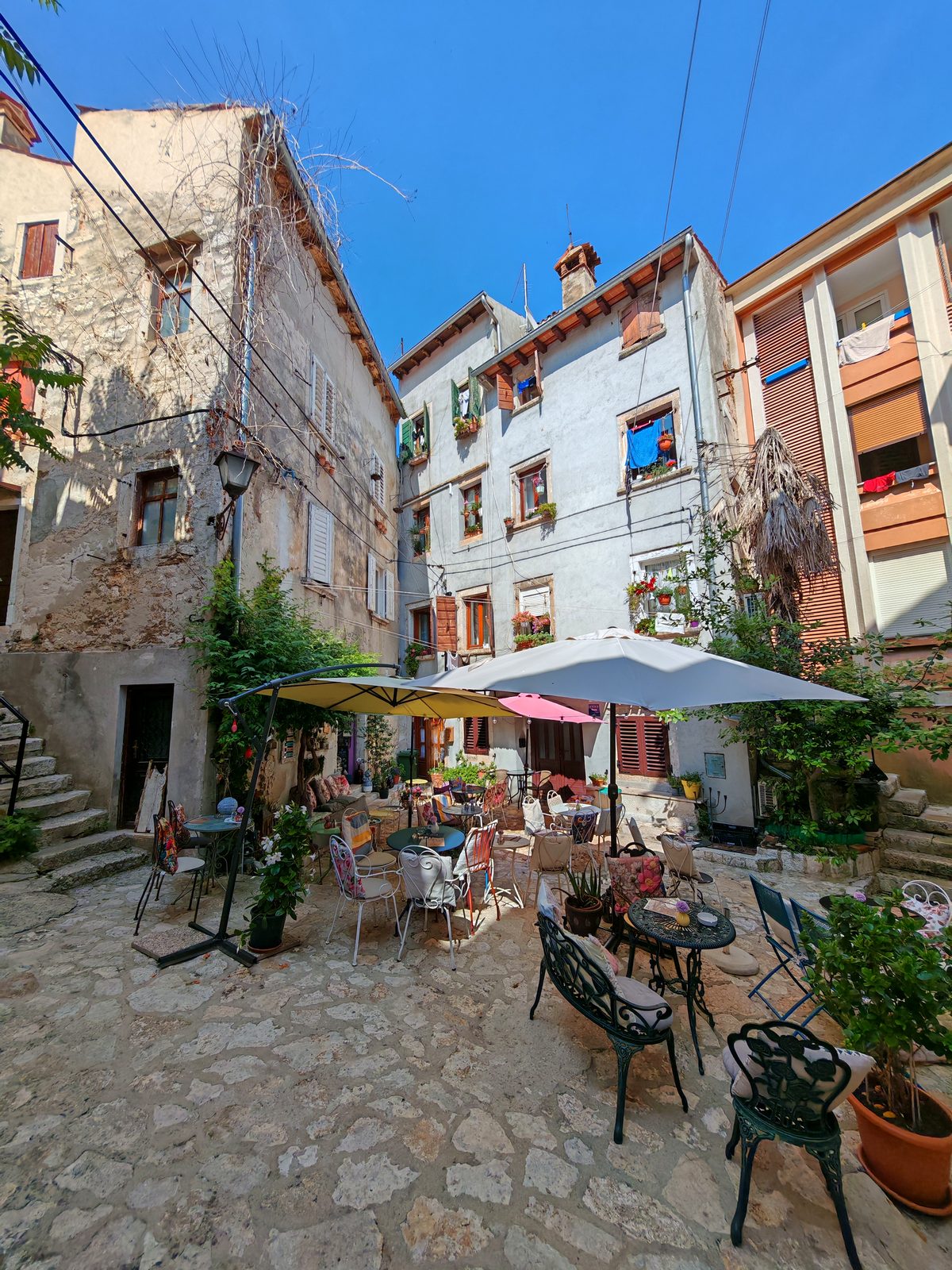
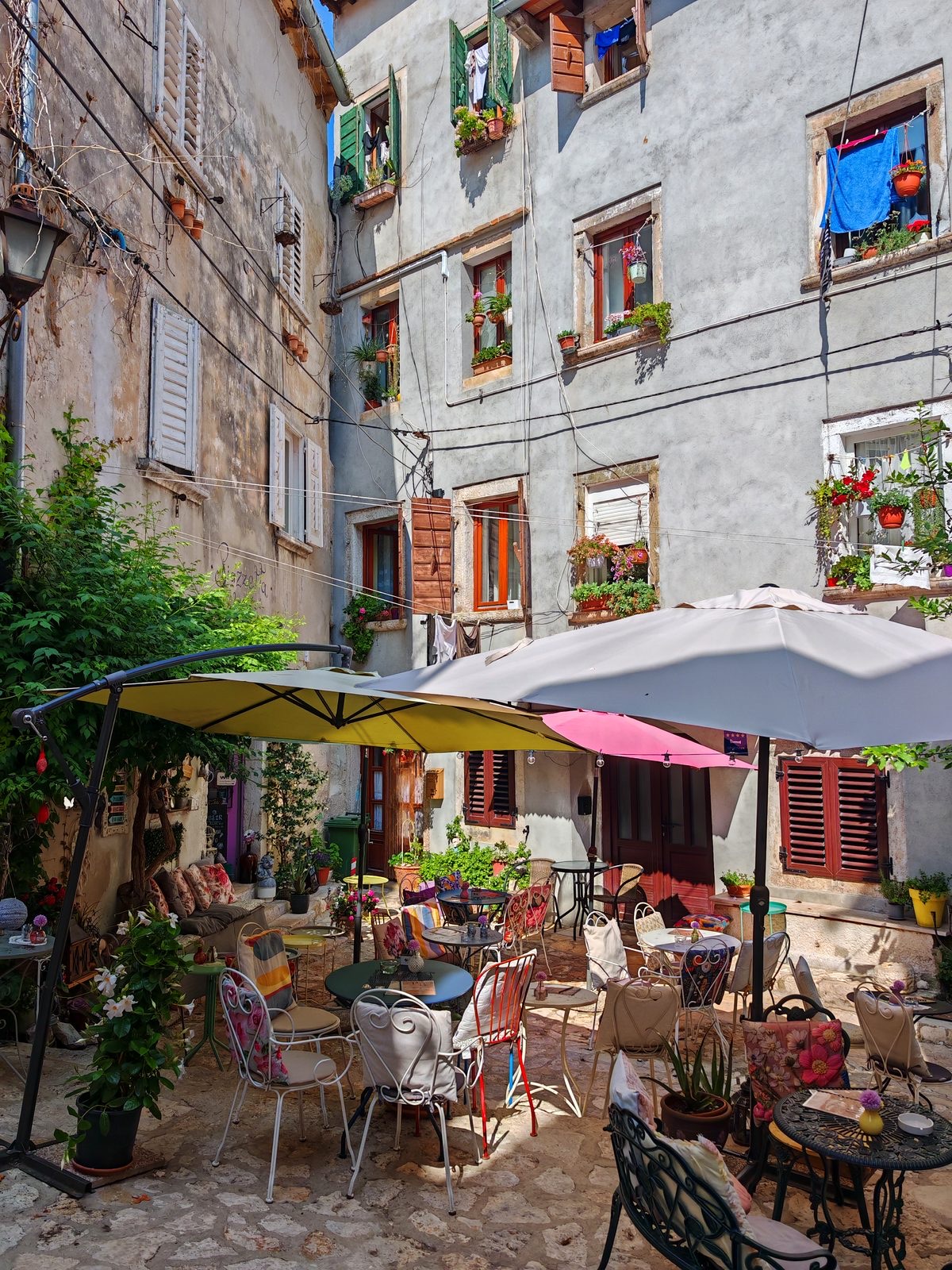
The next day our journey took us south, towards Croatia. On the way we made a very brief pass through nearby Portorož, just to feel that more modern rhythm – it’s a town of a completely different character from Piran, full of hotels, casinos and long, manicured beaches.
Our main goal was Rovinj, considered by many the most romantic town on the western coast of Istria. Once an island and today a peninsula, the old part of the town resembles Venice with its colourful houses that rise directly out of the sea.
What you must not miss in Rovinj:
- The Church of St Euphemia: Its 60-metre-high bell tower dominates the town and offers the most beautiful view of the entire Rovinj archipelago.
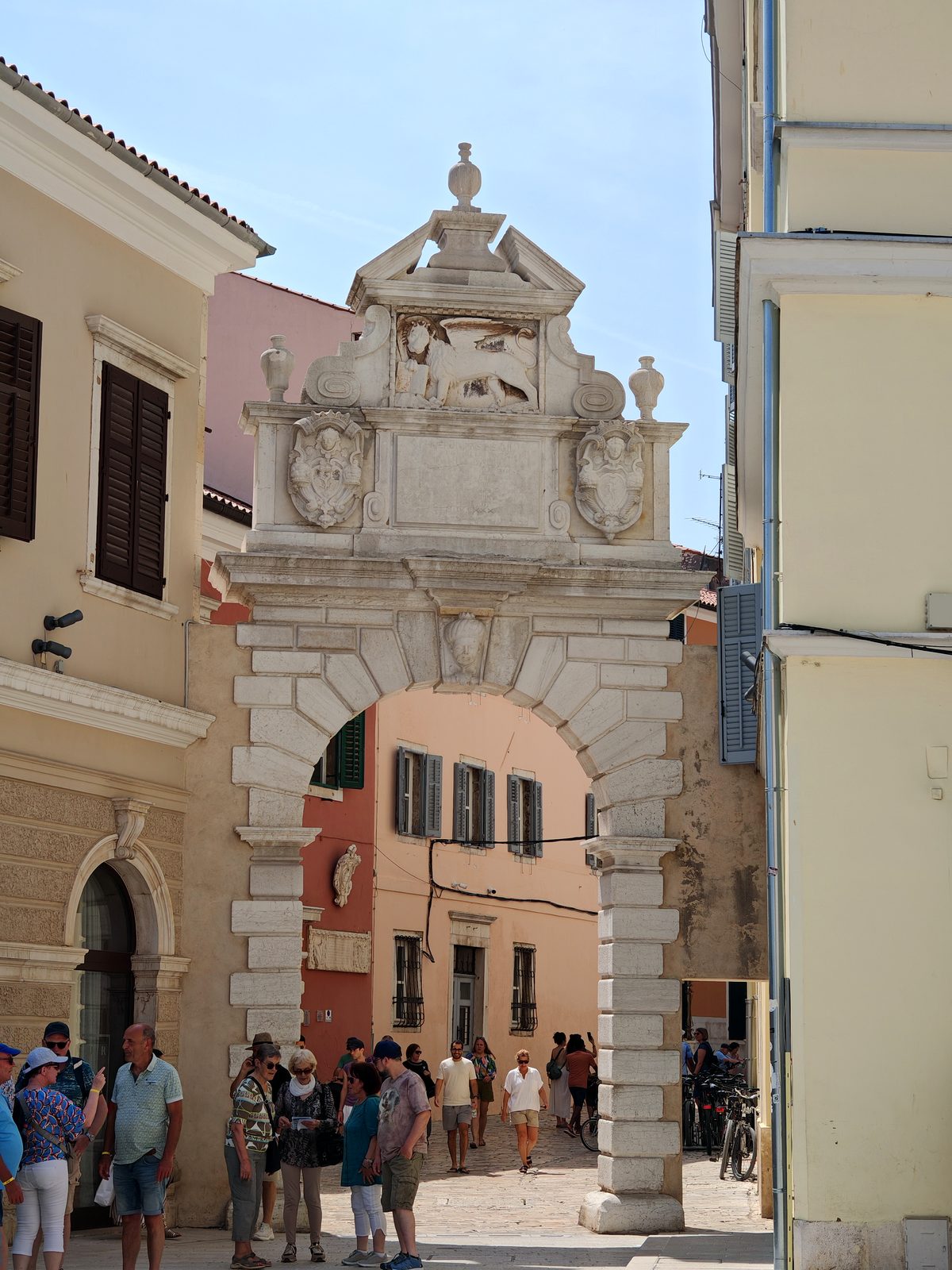
- The Balbi Arch: A Baroque passage from 1679 that marks the entrance to the old town, distinctive for being decorated on one side with a Venetian lion and on the other with a Turkish head.
- The Zlatni Rt forest park (Punta Corrente): A green oasis right next to the town, ideal for cycling and relaxing. We used the day to have a swim too, on the beautiful Zlatna uvala beach.
Besides its history, Rovinj is a serious gastronomic destination known for olive oil, truffles and the restaurant Monte, which proudly holds the first Michelin star in Croatia.
The perfect end to the trip: A break at Bled
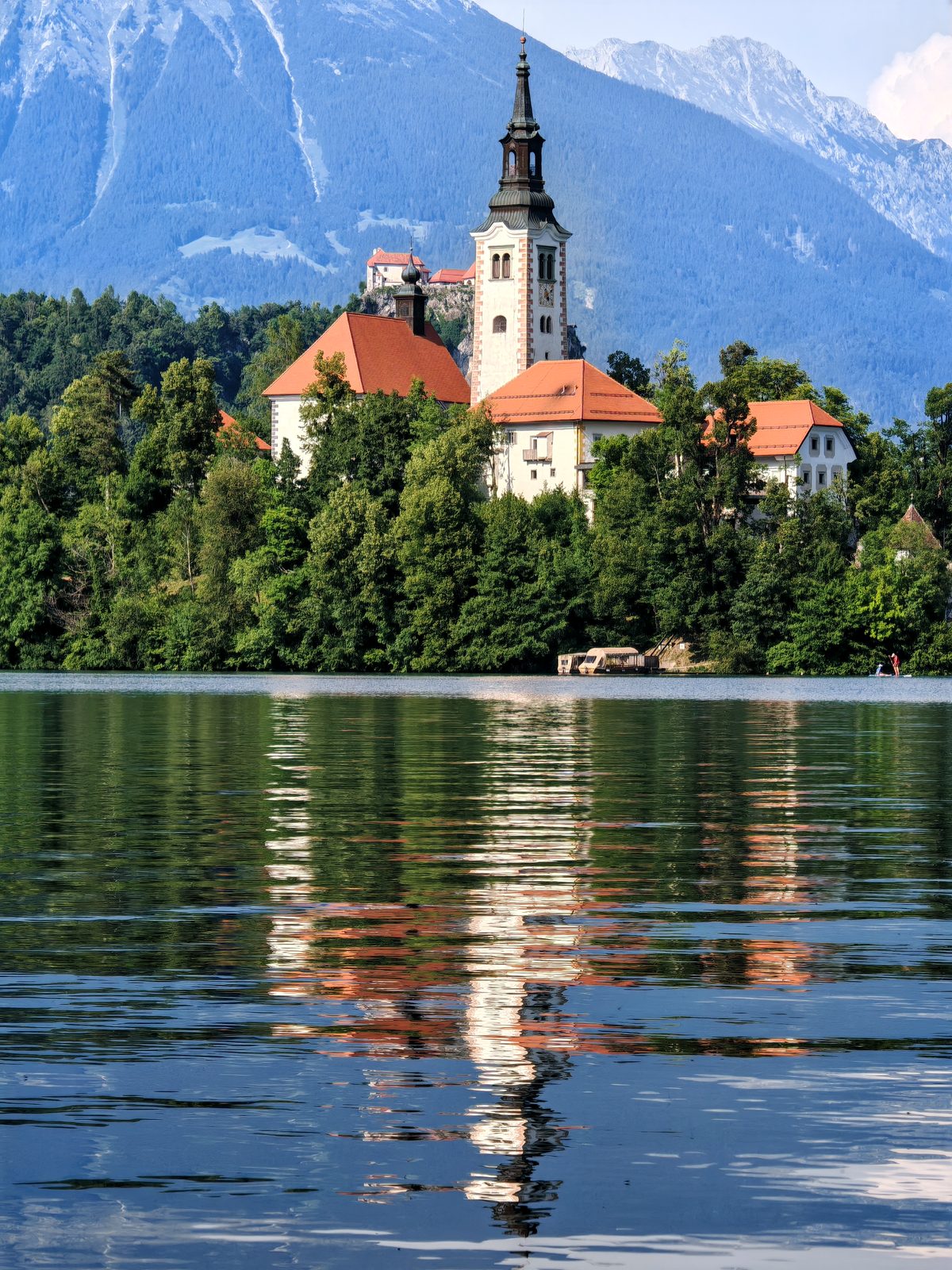
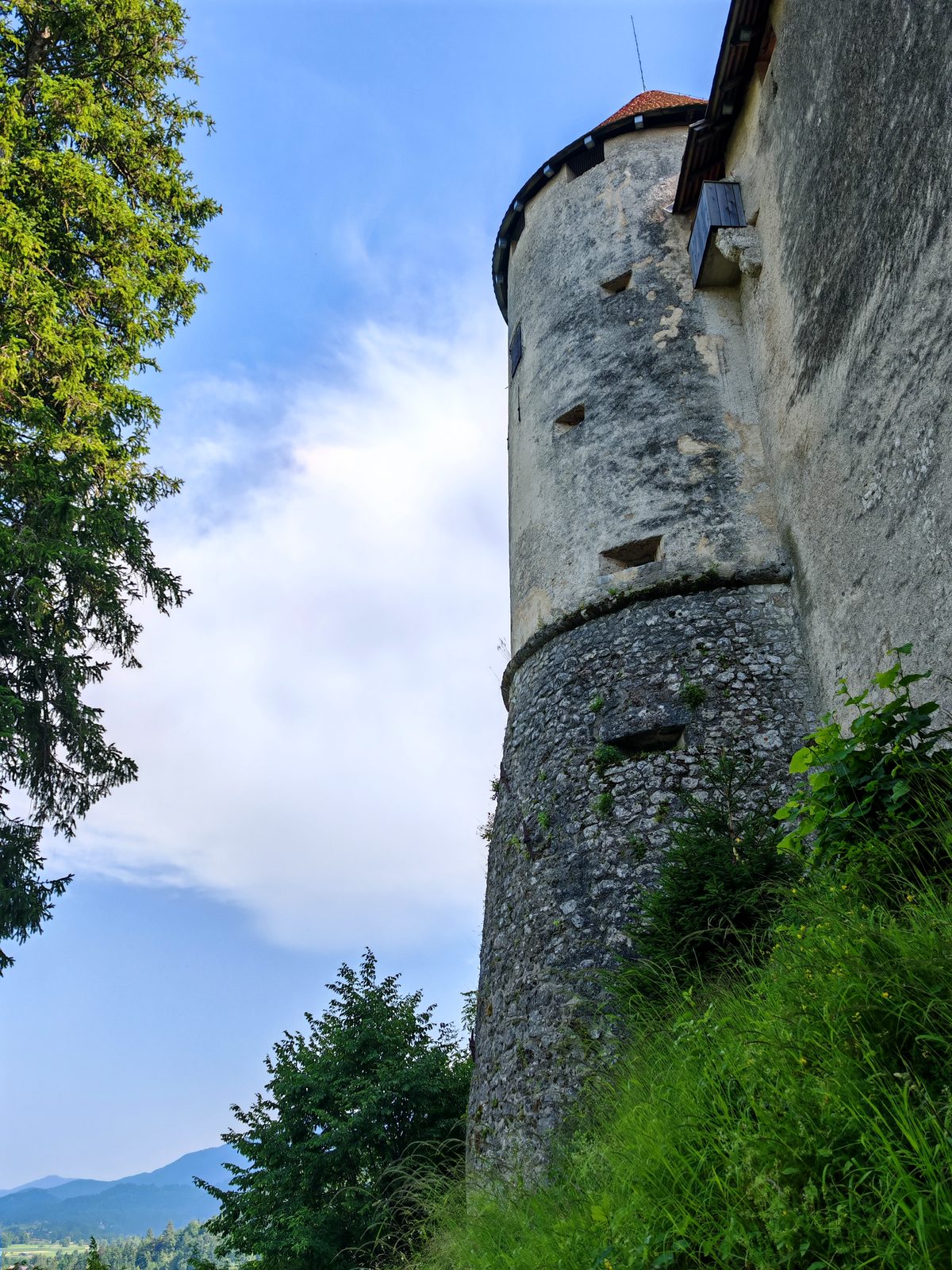
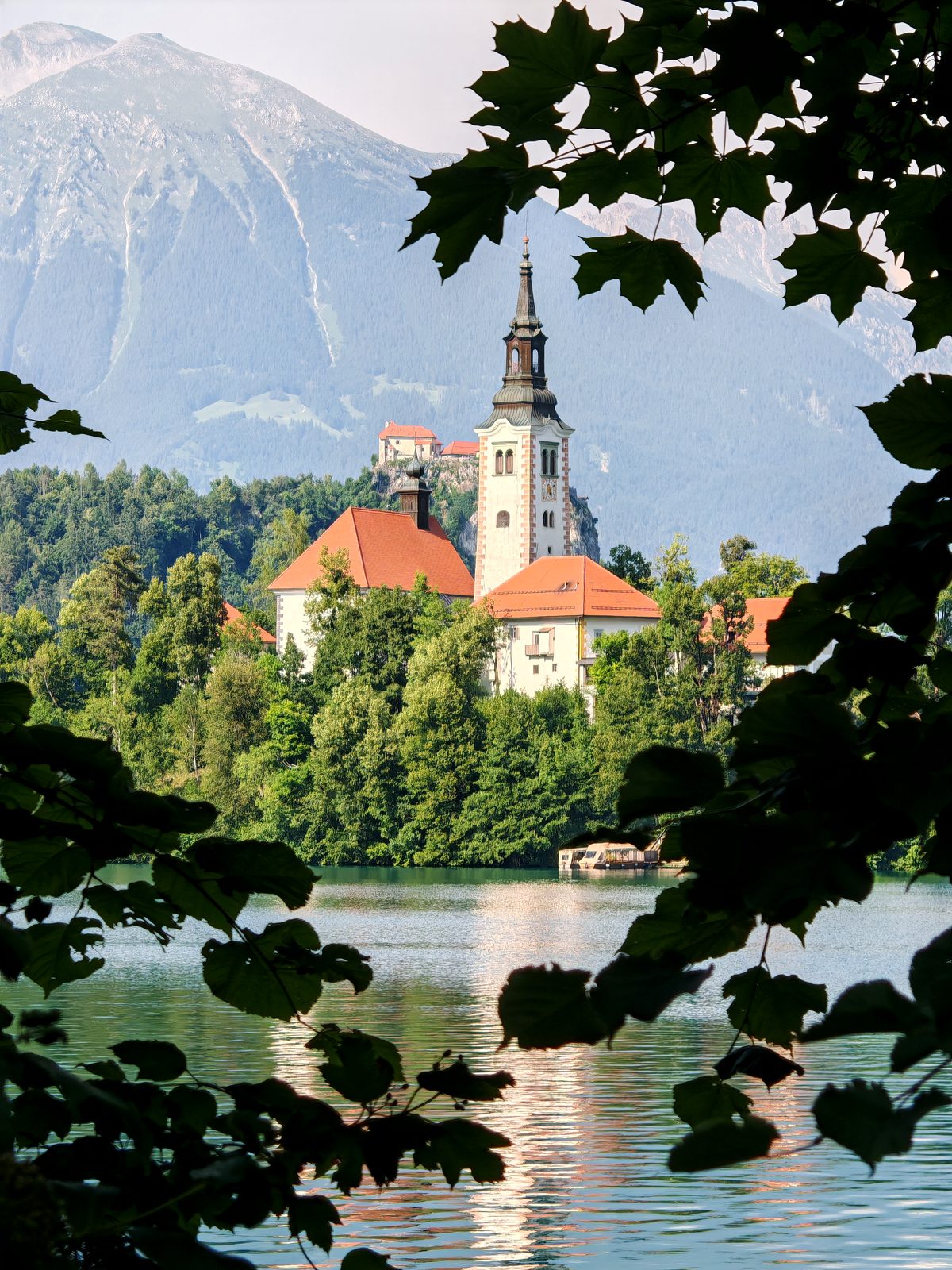
After a little more enjoyment in Piran, we headed back, and we put the perfect full stop to this trip with a short rest at Bled. Surrounded by the Julian Alps, this emerald lake really does look as if it’s been drawn, and it’s a true symbol of Slovenia.
The best of Bled:
- Bled Island: You can only reach it by pletna, traditional wooden boats. On the island, be sure to visit the Baroque church and pull the rope of the „wishing bell”.
- Bled Castle: Built in 1011, the oldest castle in Slovenia stands on a cliff 130 metres high. Besides the old printing house and the wine cellar, from here you get the most beautiful panorama of the lake.
- Kremšnita (Kremna rezina): A cult dessert of puff pastry, custard and whipped cream. They say it’s best to try it where it was created in 1953, in the patisserie of the Park hotel.
You can spend your time at Bled actively with SUP boards, kayaks, or by hiking up to the Mala Osojnica and Ojstrica viewpoints, from which those famous photos of Bled that you see on social media are taken. Whether you love the sea, history or mountain lakes, this route really does offer the perfect cross-section of the best that this part of the Adriatic and the Alps has to offer.
The combination of the sea, old towns and a mountain lake turned out, in the end, to be an excellent idea for a trip. If you’re planning something similar, below I’m leaving a few links that may be useful to you for organising the trip.
- Piran and Portorož: portoroz.si – The official portal where you can find the exact locations of public garages and information about the town. Miramare Castle (Trieste): castello-miramare.it – The official website for checking opening hours and visiting rules (including entry with dogs into the museum).
- Rovinj: rovinj-tourism.com – The town’s tourist board, useful for maps of the old town and beaches (such as Zlatni Rt).
- Lake Bled: bled.si – All the official information in one place: prices for pletna rides, tickets for Bled Castle and locations of patisseries for the original kremšnita.