

An insider’s guide through Germany’s northern gateway
When someone mentions Germany to you, you probably think first of Berlin or Munich, rarely of Hamburg. For me, however, this city carries a completely different weight. I had the good fortune of living there for six months, soaking up its energy, and from my experience, Hamburg is not just that cold, raw industrial city many imagine it to be. It is a city where seemingly incompatible worlds complement each other perfectly: monumental red-brick buildings, Germany’s largest port, a rich music scene, and water that is an inseparable part of the urban landscape.
This is not a classic, dry tourist piece. This is a guide from the perspective of someone who actually lived there, photographed the docks, drank coffee in local neighbourhoods, and rode the U-Bahn every day. Here is what is truly worth seeing and how to organise yourself without falling into the usual tourist traps.
The German Venice
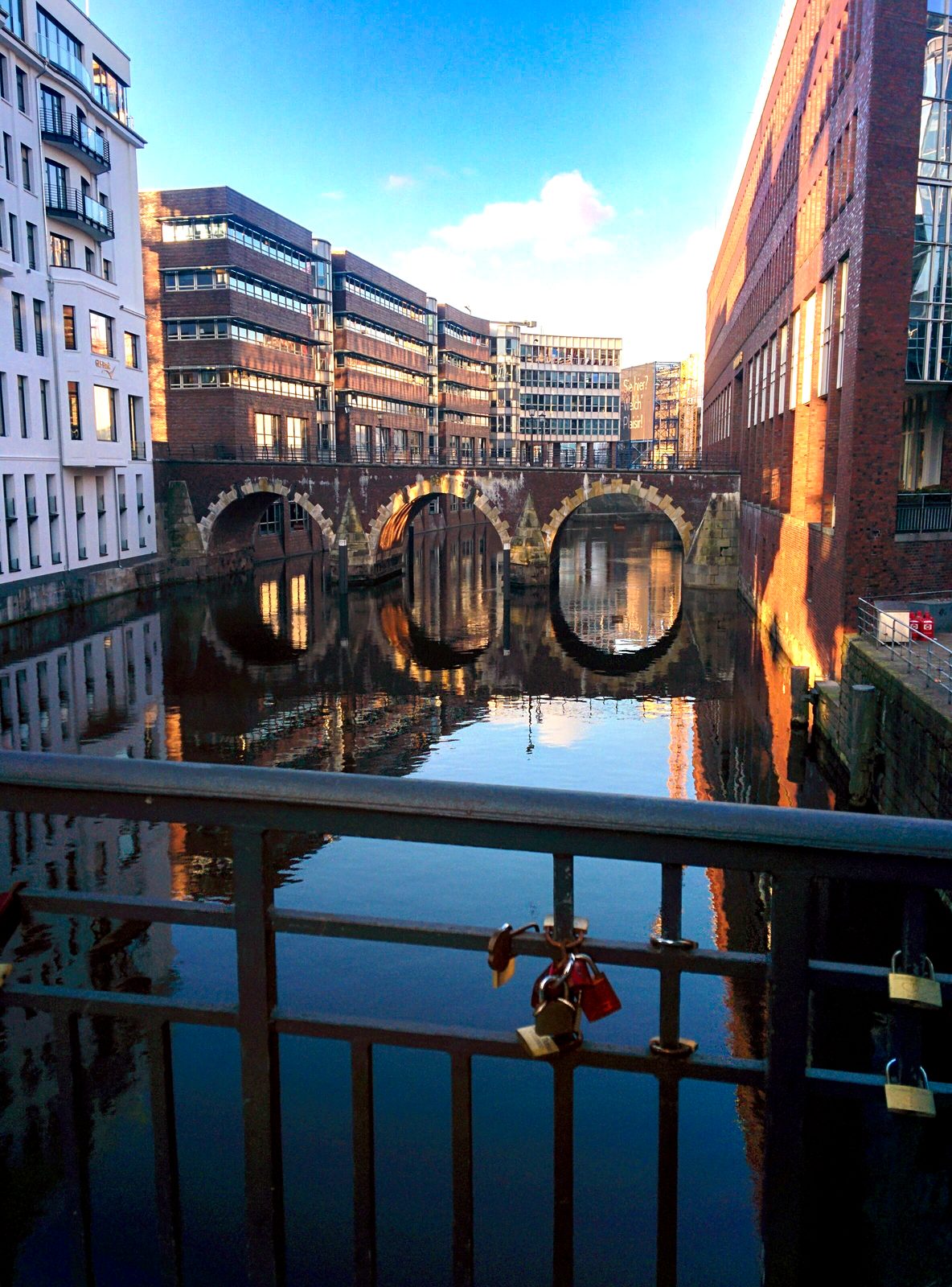
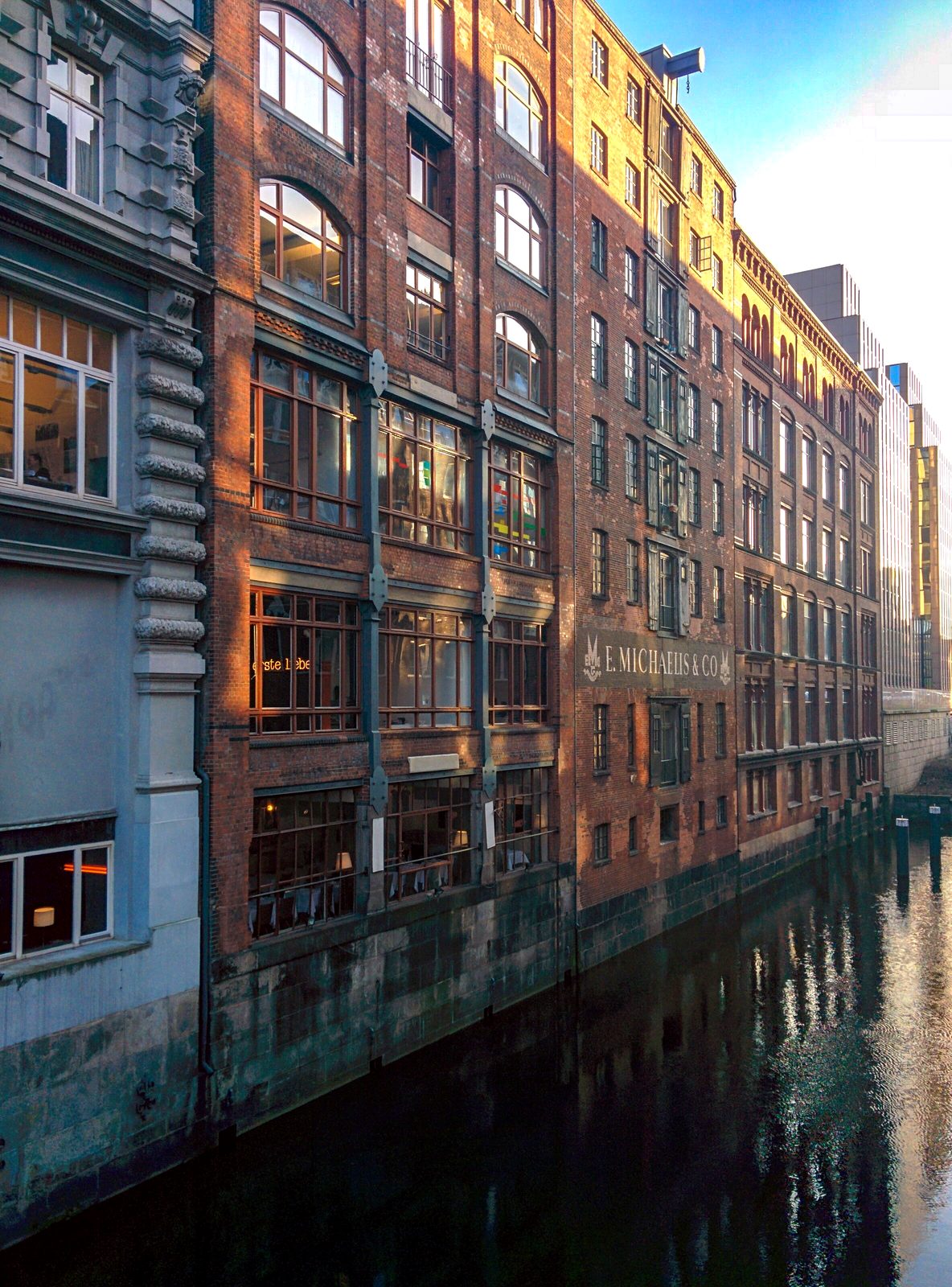
Many people don’t know that Hamburg has more bridges than Venice, which is why it is rightly called „the German Venice”. The canals that cut through the city give it an incredible, calming dimension amid all that bustling port and industrial noise. A boat ride or a simple walk along the canals is something you have to experience, especially when you are looking for the perfect shots at dusk.
What you must not miss
1. The Altstadt and the lake in the middle of the city
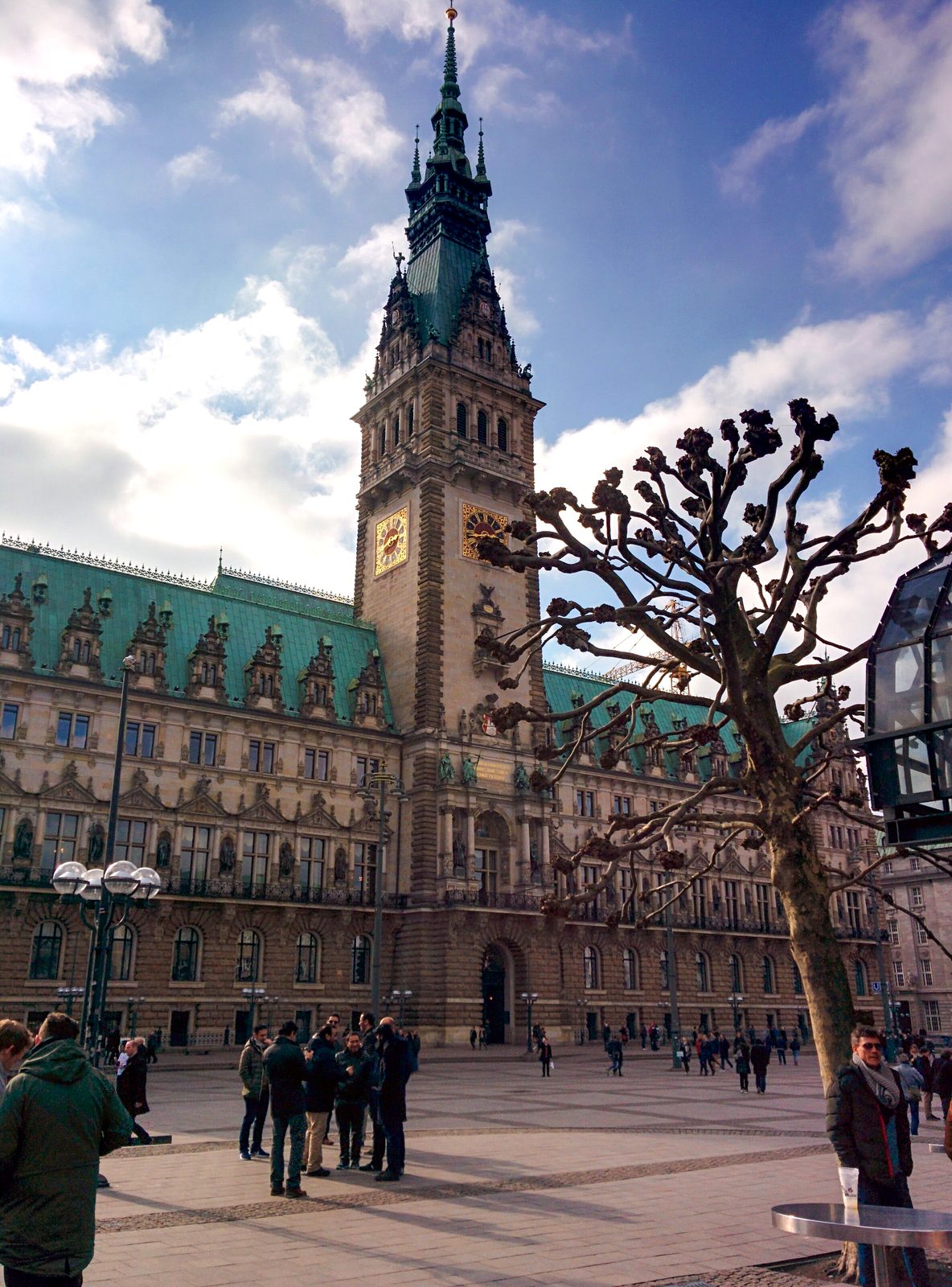
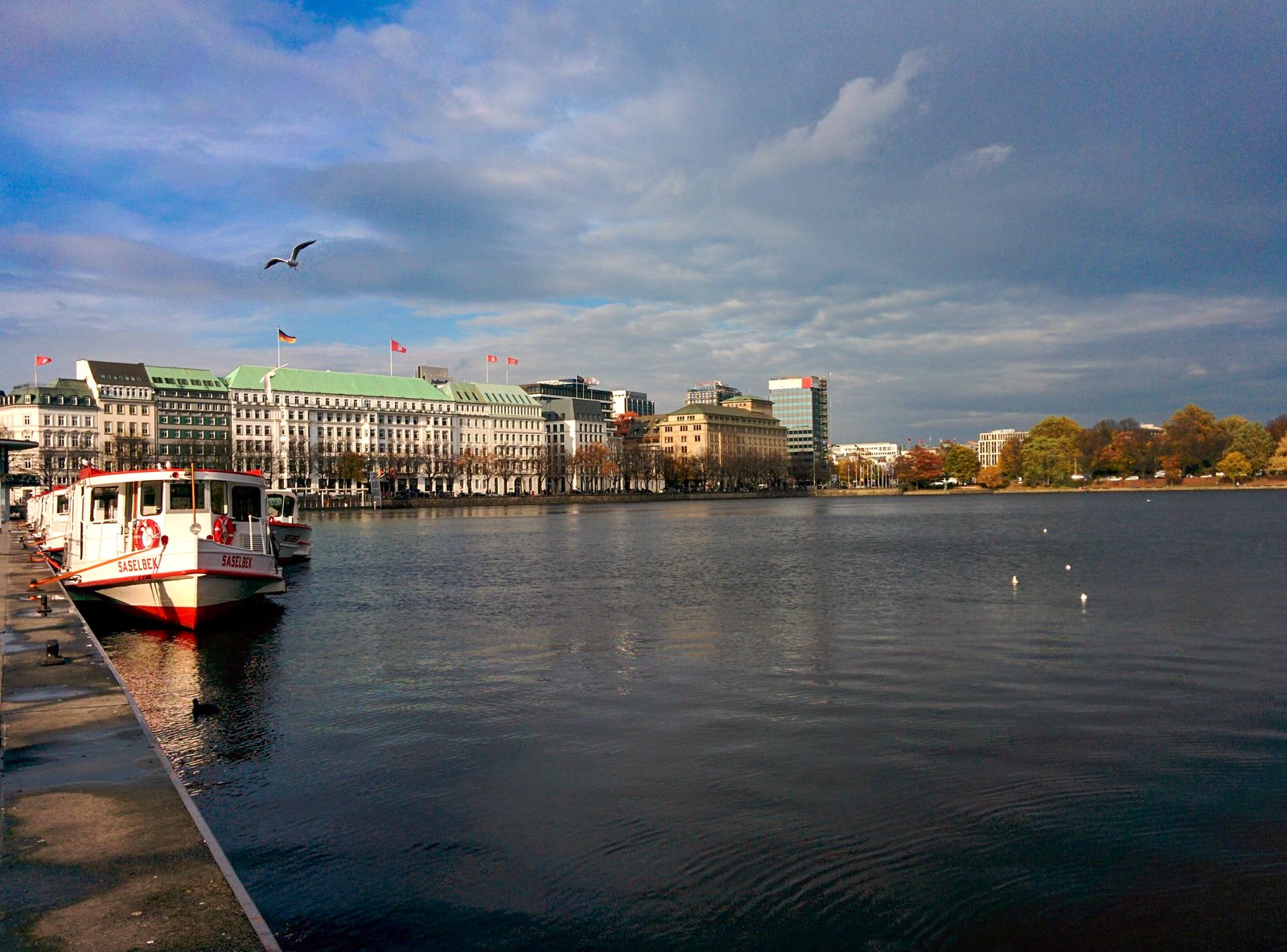
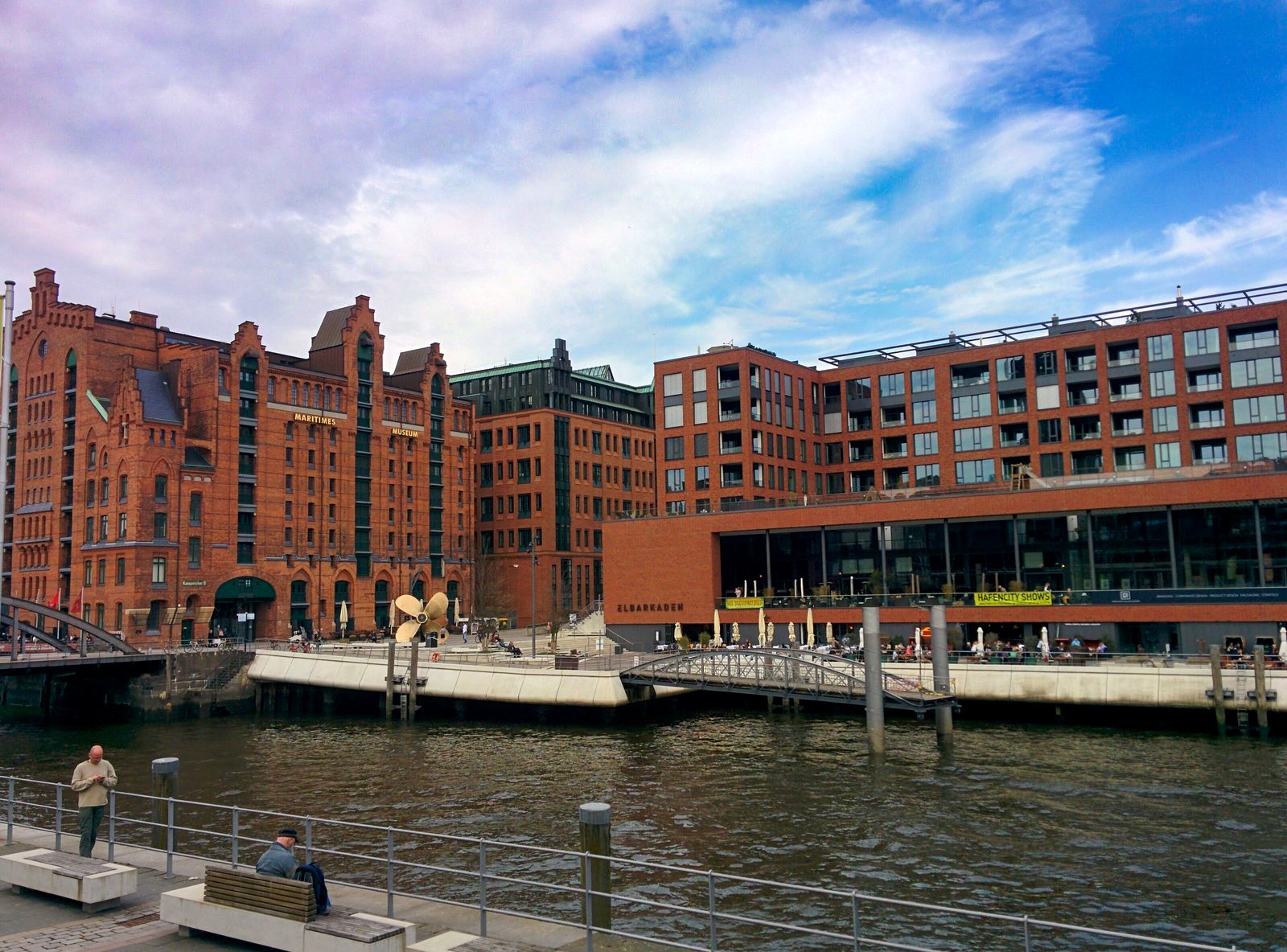
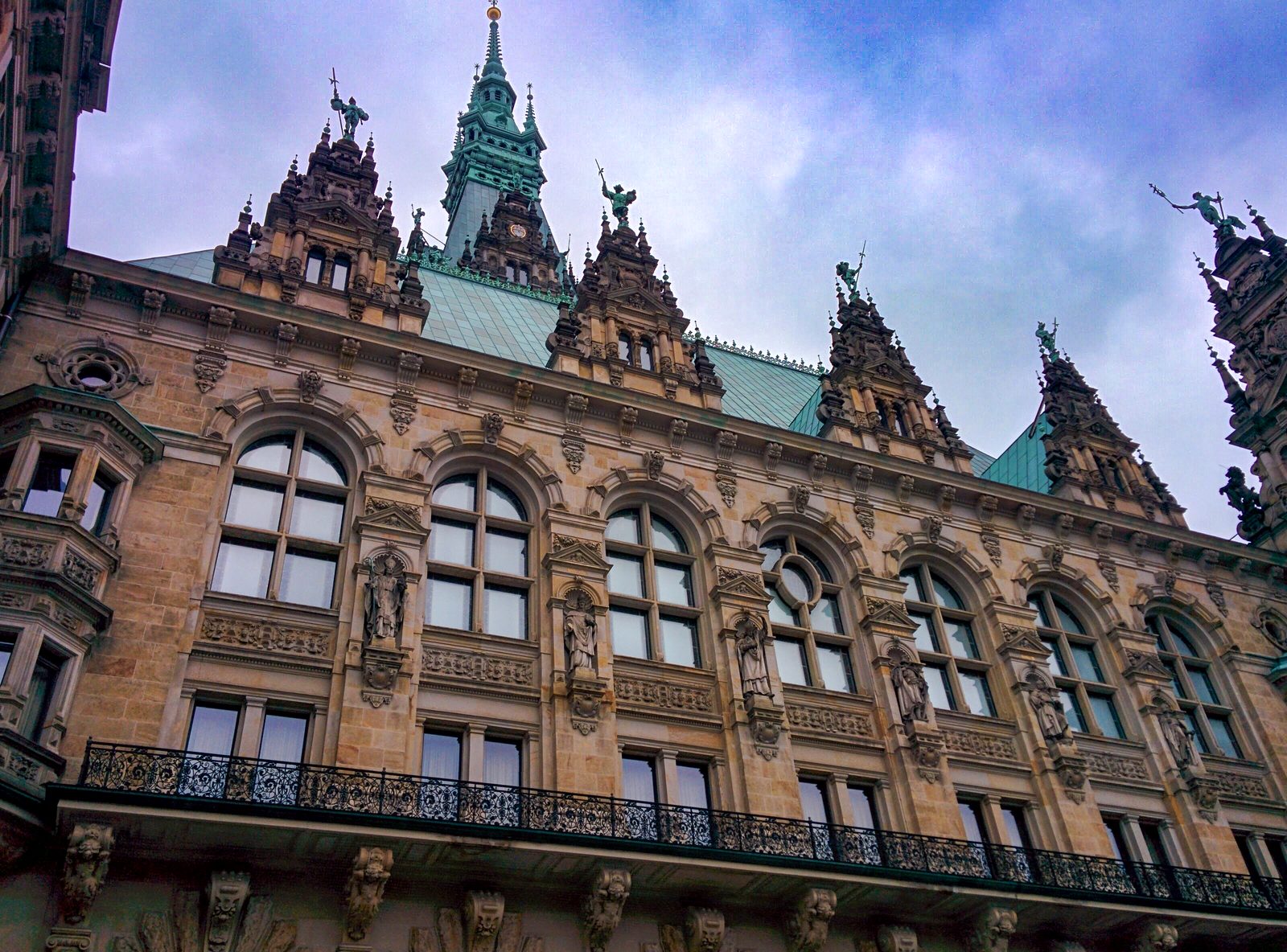
We can’t begin our tour without starting from the classic old centre (Altstadt). Hamburg has this incredible peculiarity that right in the middle of the strict city centre there is a huge lake – the Alster. A walk around the water, watching the sailboats and swans in the very heart of the metropolis, is a real experience in itself. When you turn your gaze away from the water, just a few minutes’ walk away rises the imposing Rathaus (City Hall). Unlike typical grey municipal buildings, Hamburg’s City Hall really does resemble a genuine palace. Today’s building was constructed at the end of the 19th century, after the old city hall was completely destroyed in the famous Great Fire. Because of the soft ground, this massive structure rests on more than 4,000 oak piles. It is an interesting fact that inside it has as many as 647 rooms, which means it actually has more rooms than Buckingham Palace in London. The square in front of it noticeably exudes that old, merchant wealth of Hamburg.
2. Speicherstadt and HafenCity
The largest complex of port warehouses in the world, built on oak piles in the middle of the water. This is an absolute paradise for the eyes and the lens. By day, the dark-red brick buildings are spectacular, and at night, when the floodlights come on, it all looks like a film set. Right next to it is HafenCity, the most modern part of the city, full of glass and steel, a perfect transition from the 19th century into the modern era.
3. Miniatur Wunderland
Miniatur Wunderland is a place that completely blew my mind and, without exaggeration, it is by far the best attraction in Germany. It is incredibly easy to lose hours watching the miniature Knuffingen airport with planes taking off and landing, the meticulously built cities, thousands of tiny figures, and trains passing through models of the Alps.
Pro tip: Be sure to buy tickets online, weeks in advance, since they are almost always sold out on the day of your visit.
4. Elbphilharmonie (Elphi)
This concert hall looks like a massive glass wave rising right above an old warehouse building. Although it is primarily a concert hall, the best part of the building is open to the public. Entrance to the „Plaza” and its fantastic 360-degree view of the harbour is free.
Pro tip: It’s best to book a slot online for two or three euros to avoid queueing.
Neighbourhoods with soul: Where Hamburg really lives
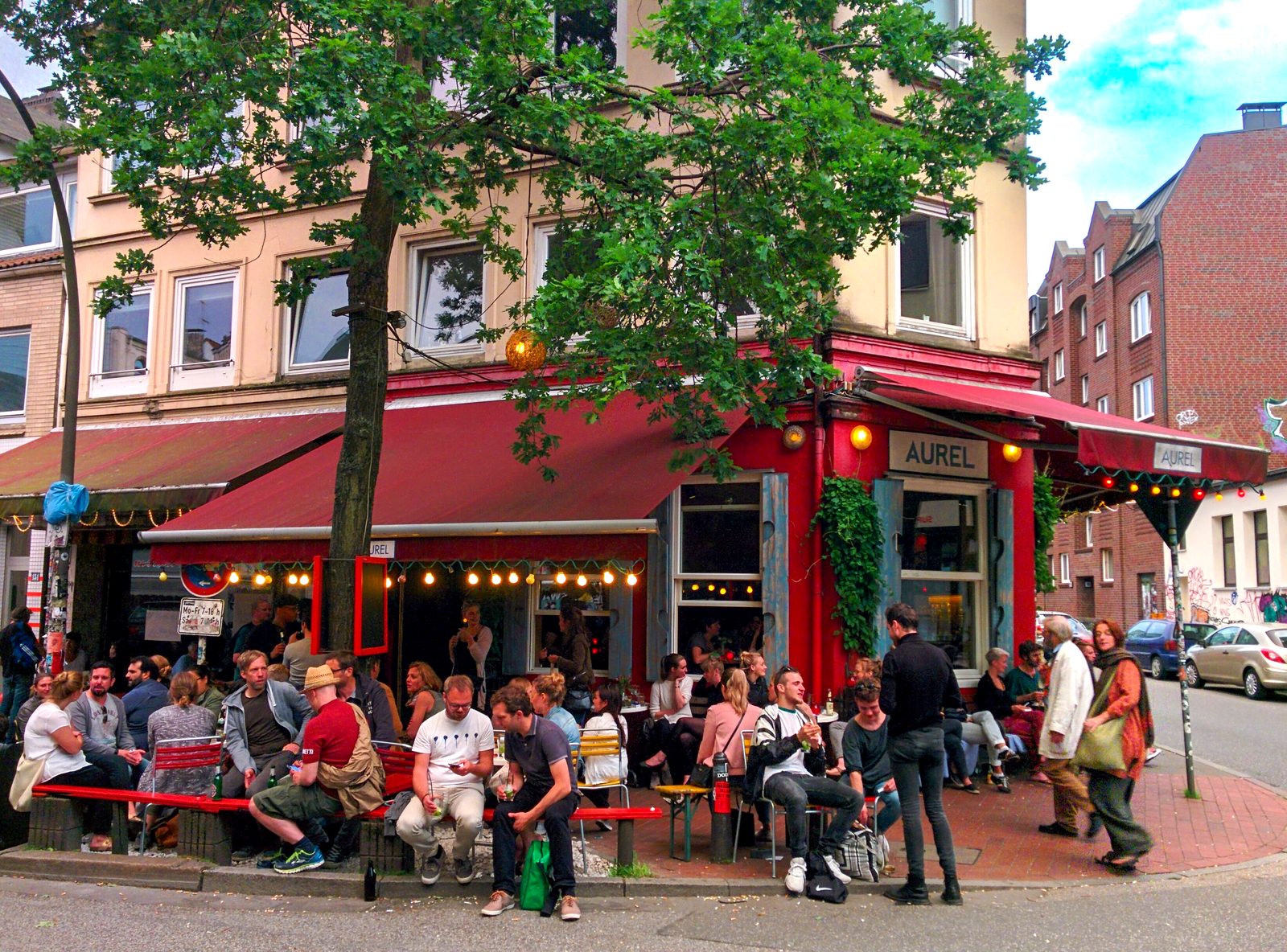
- Altona – a little Holland: For me, Altona is perhaps the most beautiful part of the city. When you walk through this neighbourhood, the architecture, the buildings and that particular building style with facing brick irresistibly recall Holland. A completely different, gentler atmosphere prevails here. It’s right here that you’ll find the café Aurel, a place where I loved to spend time. Although it is, unfortunately, currently closed, in my memory it holds wonderful recollections of Sunday morning coffee and weekend outings.
- Schanzenviertel (Schanze) and St. Pauli: Here lies the real pulse of the city. The Schanze is full of independent cafés, small designer shops and underground clubs. If you need a lively atmosphere, the cult café Katze is still going strong – great, raw energy, packed with creative people and a perfect starting point for a night out. Neighbouring St. Pauli is home to the famous Reeperbahn, the nightlife centre that after dark turns into a chaos of neon lights, bars and live music.
Food recommendation: Eimsbüttel
If you get hungry, my absolute favourite and the place where I ate regularly is Corfu Grill in the Eimsbüttel neighbourhood. It’s an excellent Greek restaurant where after 6 pm you’ll struggle to find a free table without a reservation. The portions are huge, the waiters are always in good spirits, and to make the atmosphere even better, you’re sure to be greeted by at least one shot of ouzo on the house.
Rock ‘n’ roll, clubs and live music
Few people know it, but Hamburg is a city with a serious rock ‘n’ roll pedigree. It’s no accident that The Beatles became what they are right here. Between 1960 and 1962, before they conquered the world, they forged their distinctive sound playing exhausting, hours-long gigs every night in the smoky clubs of St. Pauli, in the middle of the red-light district. The impact this city had on them is best described by John Lennon’s famous statement: „I was born in Liverpool, but I grew up in Hamburg.”
That raw, rebellious spirit – which soon afterwards drew legends like Jimi Hendrix and Jerry Lee Lewis to the cult Star-Club – lives on in Hamburg to this day. The city later gave rise to an entire underground scene, and if you’re looking for real energy, these are the places you must not skip:
- Molotow (St. Pauli): A cult venue and a mecca for lovers of the guitar sound. Bands like The White Stripes and The Killers played here before they became global stars.
- Hafenklang (Fischmarkt): A former recording studio of the dock workers, and today a pillar of punk and alternative music with fantastic underground charm right by the river.
- Knust (Schanze): A former slaughterhouse turned into a great rock club, with excellent acoustics and summer open-air gigs.
- Uebel & Gefährlich: A club at the very top of a massive concrete anti-aircraft bunker from the Second World War. Just climbing up through the concrete is an experience in itself.
- Golden Pudel Club: A nightlife legend next to the fish market. A small, ramshackle and completely independent club that defies all the rules of gentrification.
A paradise for the lens: Hidden spots for photography
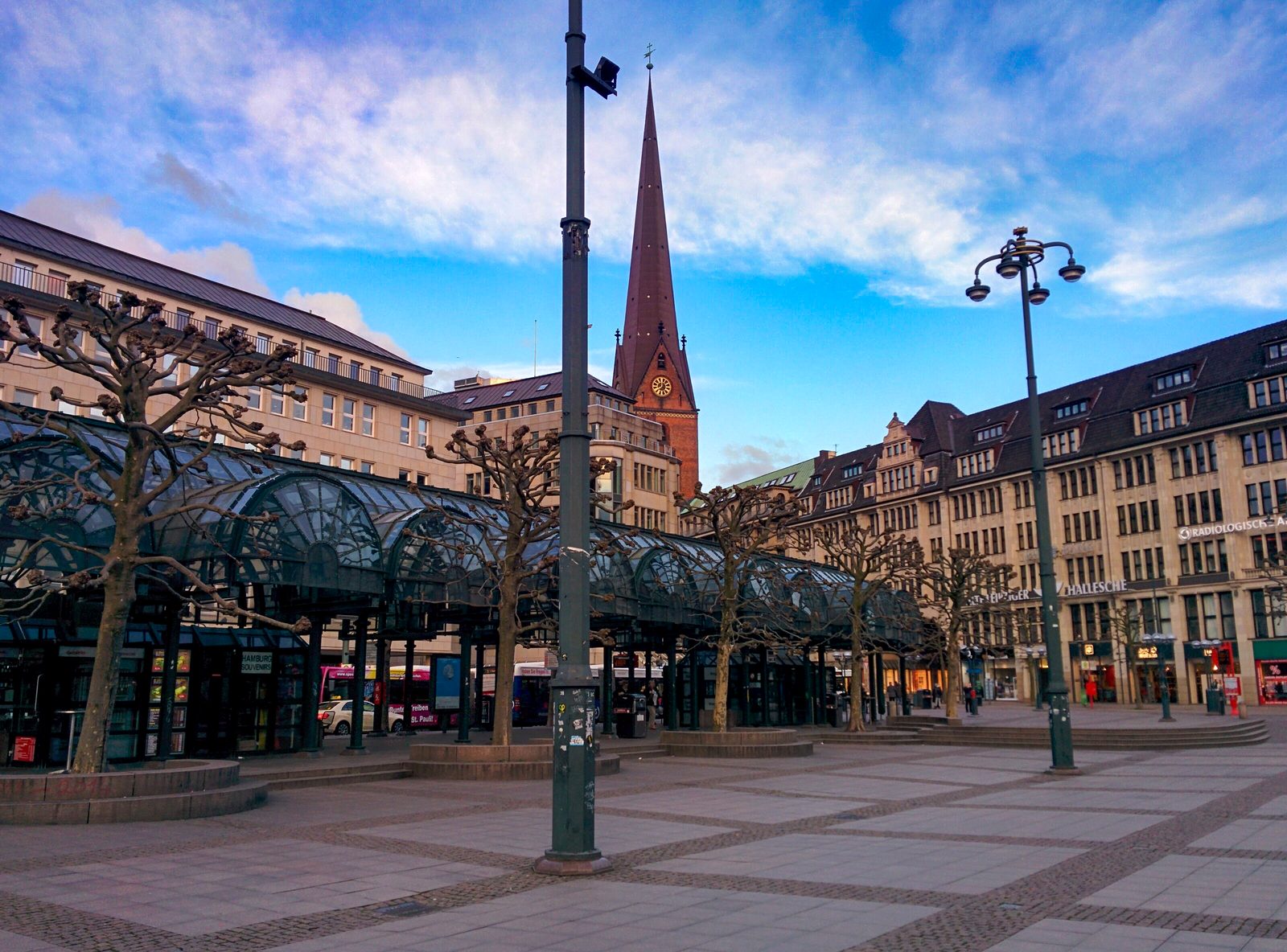
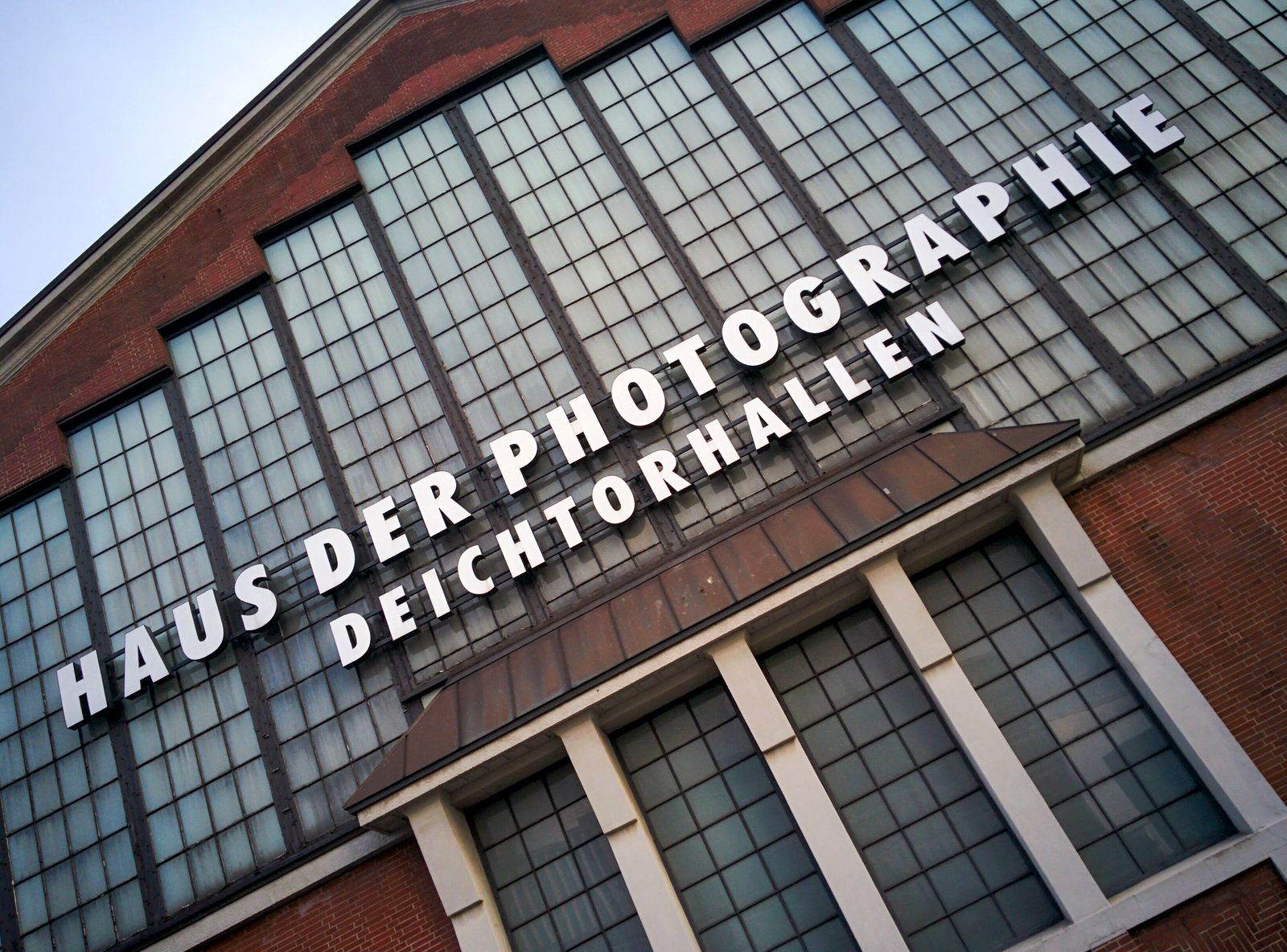
If you like seeking out corners that aren’t on every tourist postcard, Hamburg offers fantastic textures, a blend of worn industrial steel, damp concrete and neon reflections:
- Oberhafenquartier: An old logistics district turned into an artists’ quarter. Perfect for black-and-white street photography alongside old industrial rails and faded graffiti.
- Dockland (Fischereihafen): A parallelogram-shaped building with a public staircase. Climb up in the evening for a view over the endless sea of glowing harbour cranes.
- Alter Elbtunnel: A tunnel from 1911 beneath the Elbe. Its retro perspective, over 400 metres long, gives the perfect „leading lines” effect for photographs.
- Chilehaus: Expressionist architecture in brick. The eastern point of the building is so sharp that it resembles the bow of a ship.
- Kannengießerort bridge: While everyone photographs the Wasserschloss, come here at dusk (the blue hour) and you’ll get the perfect reflection of the orange warehouse lights in the dark water of the canal.
Hamburg’s oases: Parks that are truly worth seeing
A small insider detail before we set off on our walk: Hamburg’s parks teem with wild rabbits! As the city expanded, they realised that in these oases without predators they had a perfect refuge, and they decided to stay. They’ve become so at home that they’ve turned into Hamburg’s unofficial mascots – don’t be surprised if at dusk you literally trip over them.
- Planten un Blomen: A huge park stretching from the Dammtor all the way down to the border with St. Pauli. This is a true botanical oasis with a Japanese garden, lakes and greenhouses. If you go in summer, don’t miss their free open-air concerts and the spectacle of water fountains dancing to the rhythm of the music.
- Stadtpark: The real green heart of the city. It’s not an ordinary park for strolling, but a place where in summer locals gather over a barbecue, beer and music. Perfect for lying on the grass, far from the hot asphalt.
Days when the city doesn’t sleep: Football, ships and street spectacles
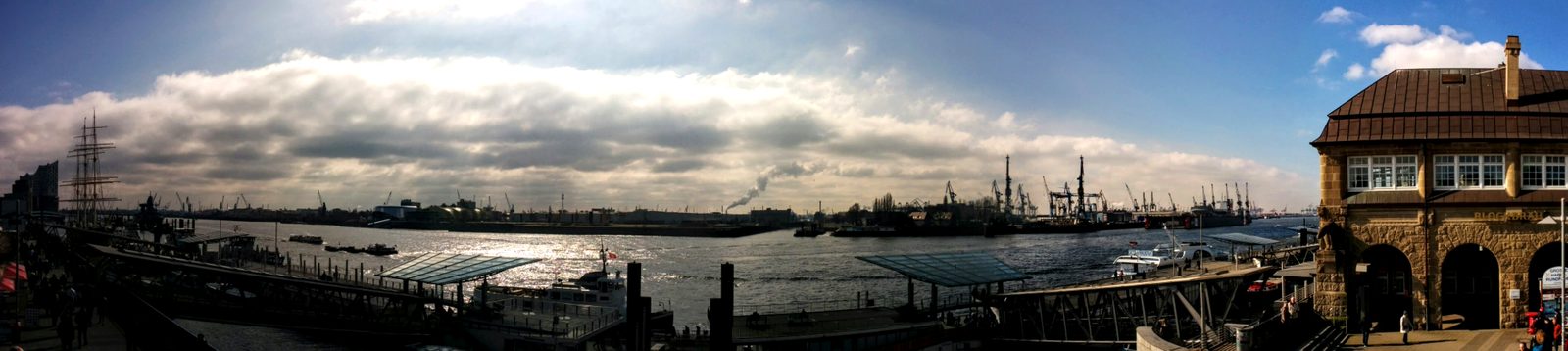
- Hafengeburtstag and Schlagermove: If you’re planning a trip, check the calendar, because these two events are spectacular. Hafengeburtstag (the Harbour’s Birthday) in May is the largest port festival in the world, with a parade of sailing ships, a ballet of tugboats on the water and incredible fireworks. On the other hand, in July there is the Schlagermove, a real carnival of love and retro music where hundreds of thousands of people, dressed in 1970s style, march behind trucks blasting Schlager tunes.
- The Queen on the Elbe (Queen Mary 2): This cruise giant regularly visits Hamburg, and for the locals it’s a real little holiday. When the Queen Mary 2 sails in, the shores around the Landungsbrücken are packed with people who come to greet the massive ship. The ship’s horn resounding through the city will literally give you goosebumps of excitement.
- Football fever (two clubs, two worlds): The city is passionately divided. On one side is Hamburger SV (HSV), the traditional giant with a rich history and the huge Volksparkstadion. On the other is FC St. Pauli, an absolute cult. Their stadium is the heart of the neighbourhood, their symbol is the pirate flag, and the atmosphere is honest, raw and incredibly energetic.
How to get around the city (Transport and logistics)
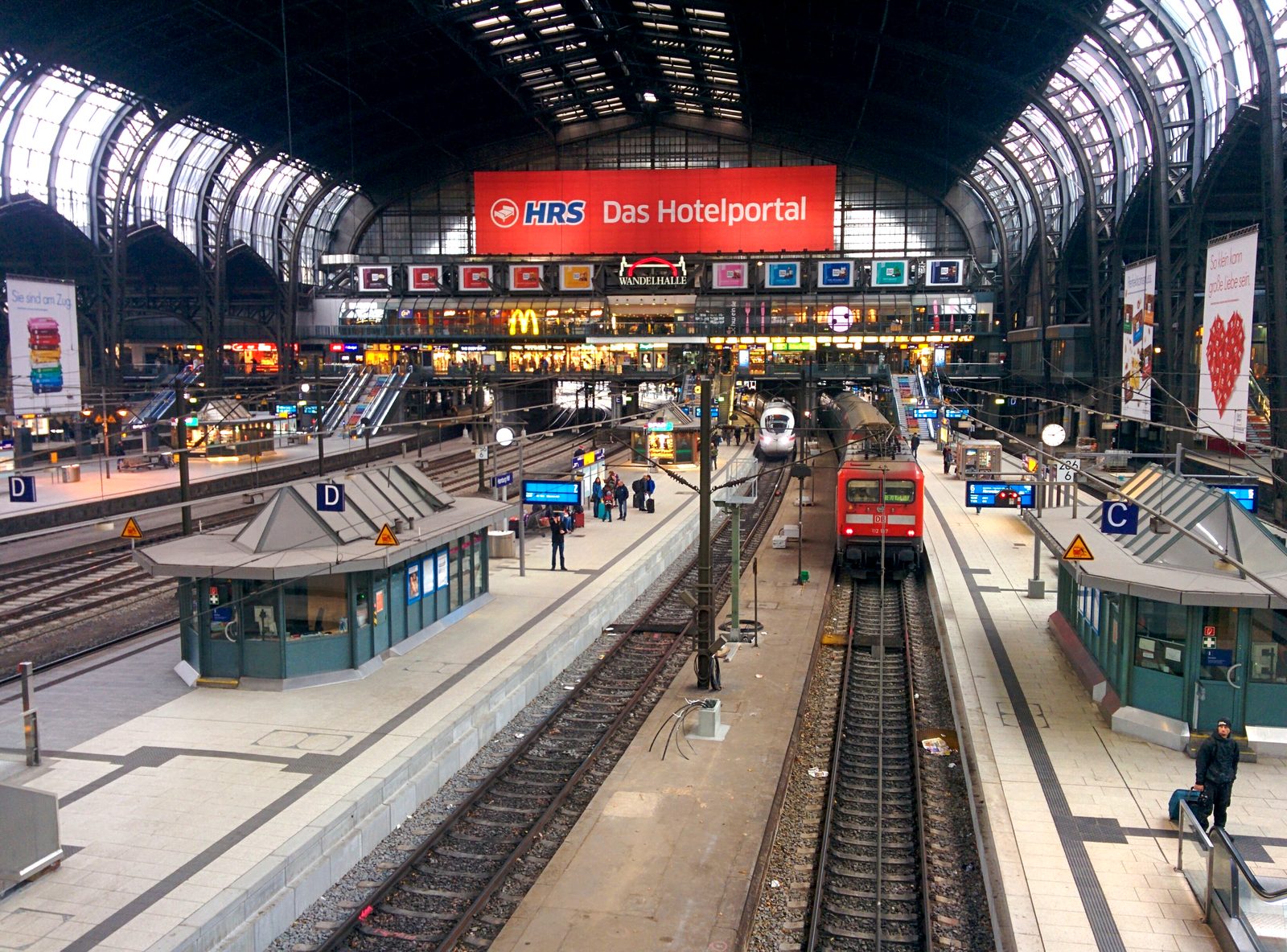
Feel free to forget about the car; the public transport (HVV) is excellent and perfectly punctual.
- U-Bahn and S-Bahn: The main arteries. The S-Bahn connects the airport perfectly with the main station (line S1), while the U-Bahn (metro) takes you to all the key parts of the city.
- How to buy tickets: Forget the ticket machines. The best option is the HVV app. There you can buy daily or group tickets that are extremely good value.
Insider secret – Ferry 62: Instead of the tourist boats, buy a daily HVV ticket and hop on the ferry at the Landungsbrücken stop. It’s part of the regular public transport, and you’ll get the best view of the harbour straight from the water!
- Hamburg CARD: If you’re planning to see a lot of museums, it pays off. It gives you free transport (zone AB) and discounts on more than 150 attractions.
Useful links for your trip:
- hvv.de – Public transport (tickets and routes)
- miniatur-wunderland.com – Tickets for Wunderland
- elbphilharmonie.de – Booking for the Elphi Plaza
- hamburg-travel.com – Official information and the Hamburg CARD
Hamburg is definitely not that polished, shop-window city. It has the raw, honest energy of a mighty harbour that never sleeps. Get your most comfortable trainers ready, layered clothing (the weather can change three times in a single day), and just surrender to its streets.
If you’re staying a day longer: Trips outside the city
If you’re in Hamburg for more than three or four days and want a change of scenery, northern Germany offers fantastic places at a very short distance. Public transport and regional trains cover these routes excellently, so the logistics are incredibly easy.
- Cuxhaven (the North Sea) – Walking on the sea floor: If you want to feel the power of the real sea, less than two hours away by train lies the coast of the North Sea. This is not a place for classic sunbathing on the sand. You go to the North Sea for something completely wild – the fascinating phenomenon of the Wadden Sea National Park (Wattenmeer). When the great low tide sets in, the water withdraws for kilometres, leaving behind the bare sea floor. The activity involves hiking across the sea floor during low tide, with obligatory suitable footwear, or walking barefoot over the mud with shells and crabs. A visit to the North Sea coast is regularly rounded off by breathing in the sharp sea air and tasting the local specialty – a fresh Fischbrötchen (a fish sandwich).
- Lübeck – the Queen of the Hanseatic League: If you love medieval architecture and red-brick Gothic, this is a must-visit stop (about 45 minutes by train). Lübeck is under UNESCO protection, looks like something out of a fairy tale, and is the world capital of marzipan. A perfect contrast to Hamburg’s concrete docks.
- Lüneburg – Student spirit and crooked buildings: A little town that survived the Second World War completely untouched. It grew rich in the Middle Ages on the salt trade, which is why the ground beneath it is slowly sinking and the buildings are incredibly crooked. Today it’s a picturesque university town full of riverside pubs.
- Altes Land – a fruit oasis: If you want a real insider’s escape into nature near the city, you can hop on the S-Bahn (line S3) heading south. The Altes Land is the largest contiguous fruit-growing region in northern Europe. Rent a bike, ride past old farmhouses, canals and endless orchards, and be sure to stop for some local apple juice.